

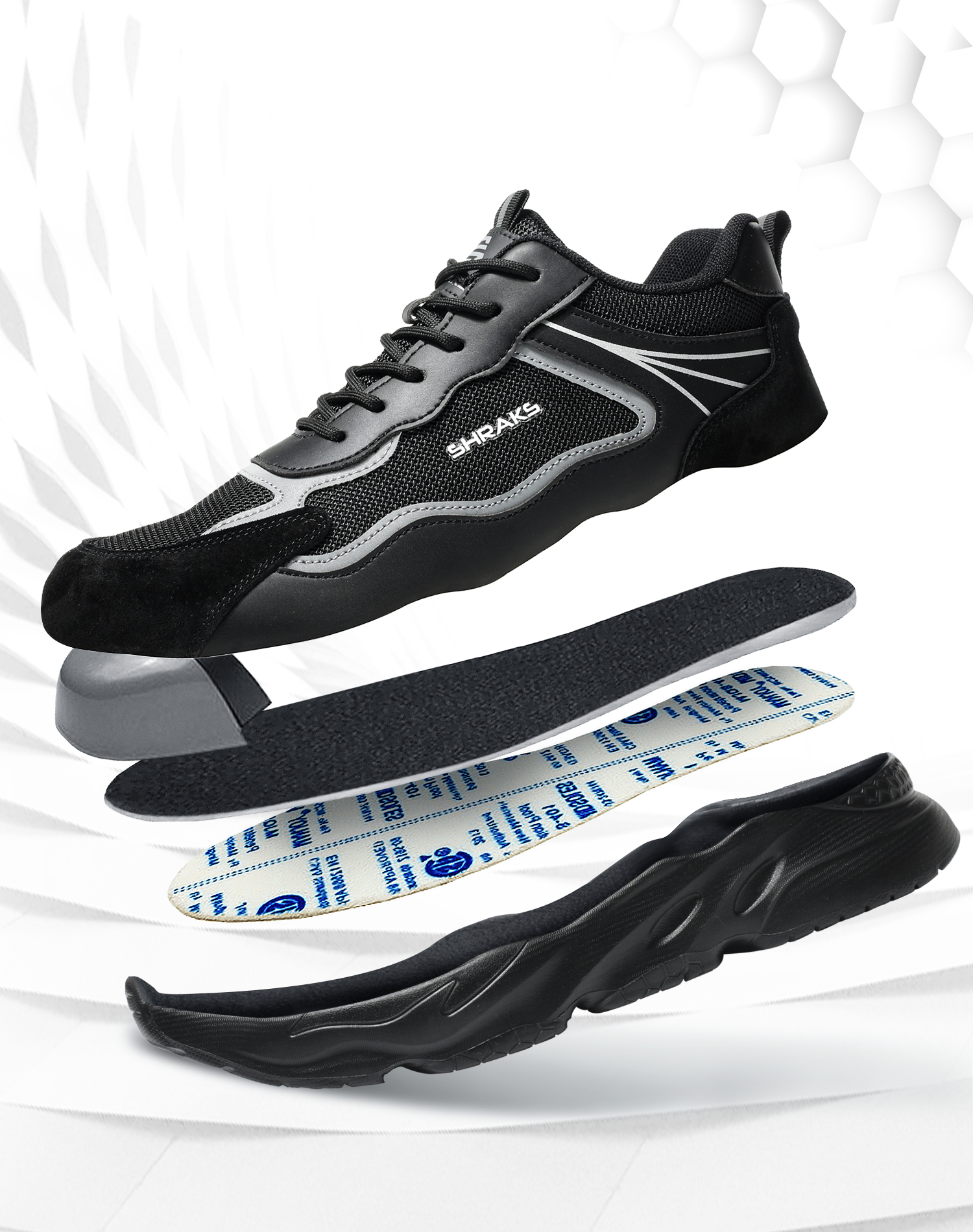
Sweaty feet at work are uncomfortable, drain focus and raise the risk of blisters or athlete’s foot. The good news: with the right safety shoes, suitable socks and a few simple routines, you can quickly control moisture and odor. Learn what really matters, which materials work, which practical tips help right away, and which breathable safety sneakers with steel toe from Shraks deliver a noticeably better in-shoe climate.
Why do feet sweat so much in work shoes?
Your soles have a high density of sweat glands. Sweat itself is odorless; bacteria break it down into smelly compounds. In tightly closed work shoes, heat builds up, moisture can’t escape and, together with skin flakes, creates an ideal breeding ground for microbes. The result: damp socks, soft skin and typical shoe odor.
Several factors intensify the problem: high ambient temperature, physically demanding tasks, synthetic and non-breathable uppers, a tight fit, thick or already damp socks, and insufficient drying time between wears. Stress can also increase sweating. With persistent heavy sweating or cracked, white-soggy skin, the risk of fungal infections rises. Find more background and practical selection help for hot days in the guide Breathable safety shoes in warm work environments.
Fit is crucial. If a shoe pinches or is too short, toes and forefoot bear more load, friction increases and feet heat up. An ergonomic insole can improve pressure distribution. It’s also vital to manage the internal climate actively: breathable materials, moving moisture away from the foot and regularly drying shoes are the most effective levers against sweaty feet in safety footwear.
The right materials: breathable safety shoes and socks
Safety shoes
Choose light, breathable uppers like technical mesh or micro-velour. Perforations and ventilation zones support airflow. Climate membranes can vent sweat vapor out while blocking external water. Ensure enough toe room for air circulation and look for soles with moisture management. In warm environments, open or perforated S1P models often have a climate advantage, while in wet areas S3 models with breathable membrane are sensible. For the hottest months, see Summer work boots: let your feet breathe.
Socks
Your sock is the first climate system. Moisture-wicking performance yarns or blends with wool keep skin dry. Thin, close-fitting, low-seam socks help prevent friction. Materials like merino wool regulate temperature and pick up odor more slowly. Specialty socks with silver fibers can reduce bacterial load. Regular changing and thorough washing at an appropriate temperature are key.
Buyer's check
Breathable upper, ample forefoot room, slip-resistant yet flexible sole, replaceable footbed, correct EN ISO 20345 protection class, and socks made from moisture-wicking yarns. More hands-on advice in 7 tips to prevent foot problems at work.
Practical tips against sweaty feet at work
Daily foot care
Wash feet daily in lukewarm water with mild soap and dry thoroughly, especially between toes. Short nails and removing callus reduce friction and bacterial niches.
Smart sock changes
Bring at least one fresh pair for your shift. Change at mid-shift if needed. Wash socks thoroughly after use and store fully dry. Direct tips for sweaty feet (socks, insoles, material choice) are here: Work shoes against sweaty feet: tips and solutions.
Alternate and dry shoes
Don’t wear the same pair two days in a row. Remove insoles after work and let shoes dry in a well-ventilated place away from direct heat. Alternating pairs allows full drying and sustains a pleasant foot climate.
Use insoles and foot powder
Replaceable, moisture-absorbing insoles support the climate. Foot antiperspirant or a light powder can reduce sweating and minimize friction.
Targeted foot baths
Short foot baths with lukewarm water and additives like sage can soothe. Then dry completely and put on socks right away to avoid rebound sweating.
Mind the fit
Too-tight or slippery shoes increase heat and blisters. Adjust size for thicker winter socks or thinner summer socks and try shoes in the afternoon when feet are slightly larger.
See a doctor for heavy sweating
If you sweat unusually heavily despite all measures or repeatedly have skin issues, consult your doctor. There may be medical causes that need targeted treatment.
Breathable safety shoes from Shraks
Looking for noticeably lighter, breathable safety shoes against sweaty feet without compromising protection? Shraks’ sneaker-inspired models combine airflow with safety to standards like EN ISO 20345. Lightweight uppers, thoughtful cushioning and grippy outsoles deliver all-day comfort.
Discover, for example, Shraks Nova with breathable upper and toe protection, the sporty Shraks Moda for an airy feel, the dynamic Shraks Stride and the versatile Shraks Moon and Shraks Venu. Matching orthopedic insoles are available for even more comfort.
Care and maintenance: keep breathability alive
Air your shoes daily, remove insoles and tap them out. Wipe the inside with a damp cloth and mild cleaner; let dry fully. Discreet hygiene sprays can lower bacterial load without clogging materials. Avoid direct heat sources that could damage adhesives and membranes. Remove dirt from uppers regularly so pores and mesh stay open. Replace worn insoles in time. Detailed guidance is available in our guide to cleaning and caring for steel-toe sneakers.
FAQ: safety shoes for sweaty feet
Which work shoes for sweaty feet?
Light, breathable safety shoes with mesh uppers, ventilation zones and a replaceable footbed are ideal. In warm, dry areas, S1P models often fit best; in wet zones, S3 models with breathable membrane are wise. Good fit and enough toe room are crucial.
Which shoes prevent my feet from sweating?
Completely sweat-free isn’t possible, but shoes with high airflow and moisture-wicking linings significantly reduce moisture. Combine with functional socks and rotate shoes and insoles regularly for a dry climate.
How do I stop smelly feet in work shoes?
Daily foot hygiene, changing socks, drying shoes, airing insoles, discreet hygiene sprays and foot antiperspirant help fast. Choose breathable materials and don’t wear the same pair two days in a row.
What works best against sweaty feet?
The combination matters: breathable safety shoes, moisture-wicking socks, consistent care and smart routines at work. For strong, persistent sweating, seek medical advice.
Ready for noticeably drier feet on the job? Choose breathable sneaker-style safety shoes from Shraks and find your ideal model for long, comfortable workdays.


Leave a comment
This site is protected by hCaptcha and the hCaptcha Privacy Policy and Terms of Service apply.