

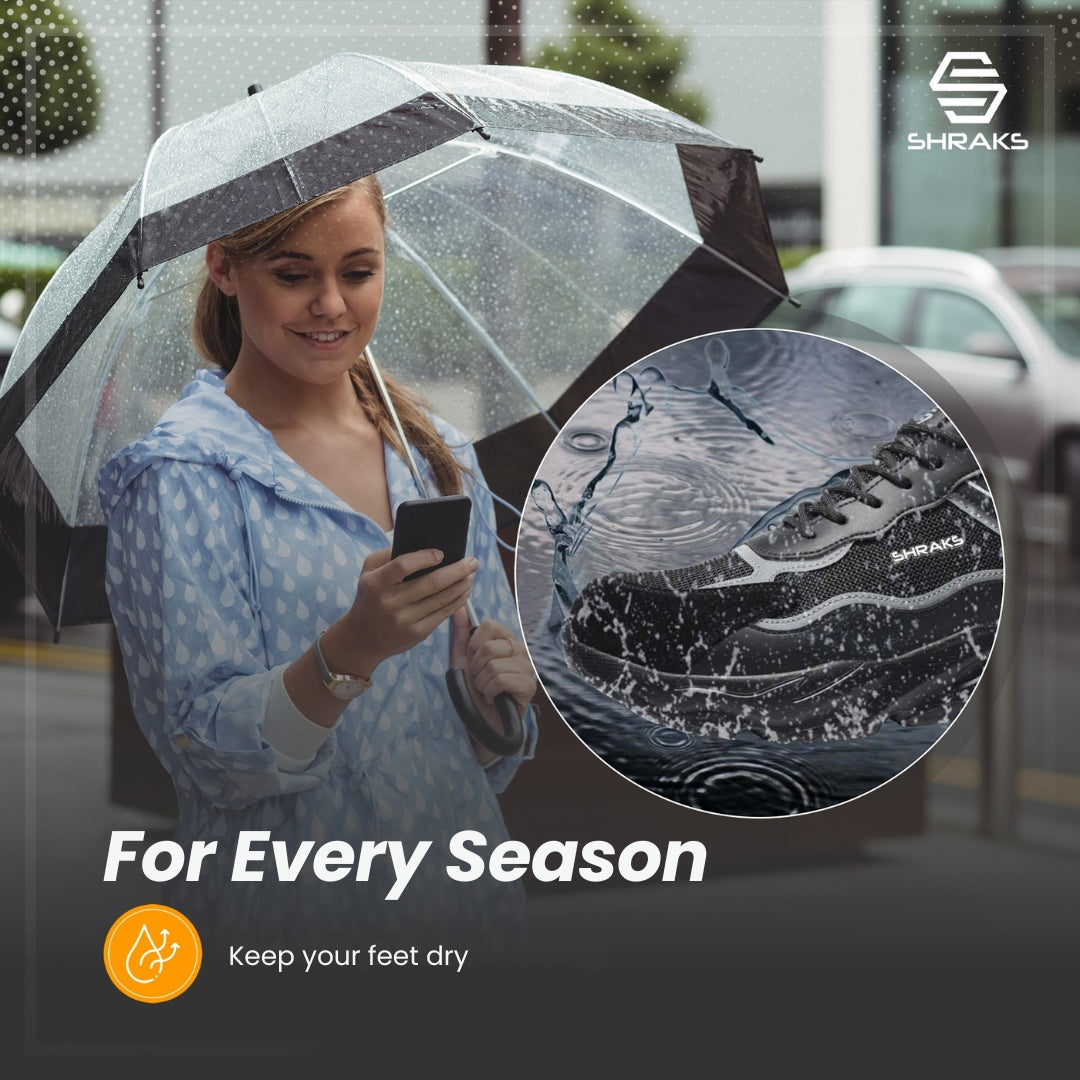
Looking for waterproof safety sneakers that truly keep you dry in rain, on wet floors, or with splashes—while staying comfortable? Here are practical recommendations: what to look for when buying, how to assess S1P vs. S3, what WR and WRU mean, which features ensure grip and comfort, and how to maintain your shoes so they stay waterproof longer. Make an informed choice instead of relying on marketing claims.
What makes a safety sneaker truly waterproof?
Waterproof safety sneakers combine several building blocks. The decisive mark is WR (whole shoe waterproof) under EN ISO 20345. Many models are merely water-repellent or have WRU (upper absorbs minimal water), which isn’t enough for sustained wet conditions. Check for:
- Membrane laminates: Multi-layer construction with a waterproof, breathable membrane and sealed/taped seams.
- Gusseted tongue construction: Prevents water from entering over the instep.
- Raised rand and tight stitching: Reduces entry points in splash zones.
- Uppers: Hydrophobic leather or robust synthetics with durable water-repellent finish.
Important: Breathability remains a comfort factor. Quality membranes let moisture vapour escape so your feet stay dry, while blocking water from the outside. If WR isn’t clearly stated, the sneaker is usually only water-repellent, not waterproof.
Protection, comfort and functionality on the job
Your waterproof safety sneakers must do more than seal out water. Evaluate models holistically:
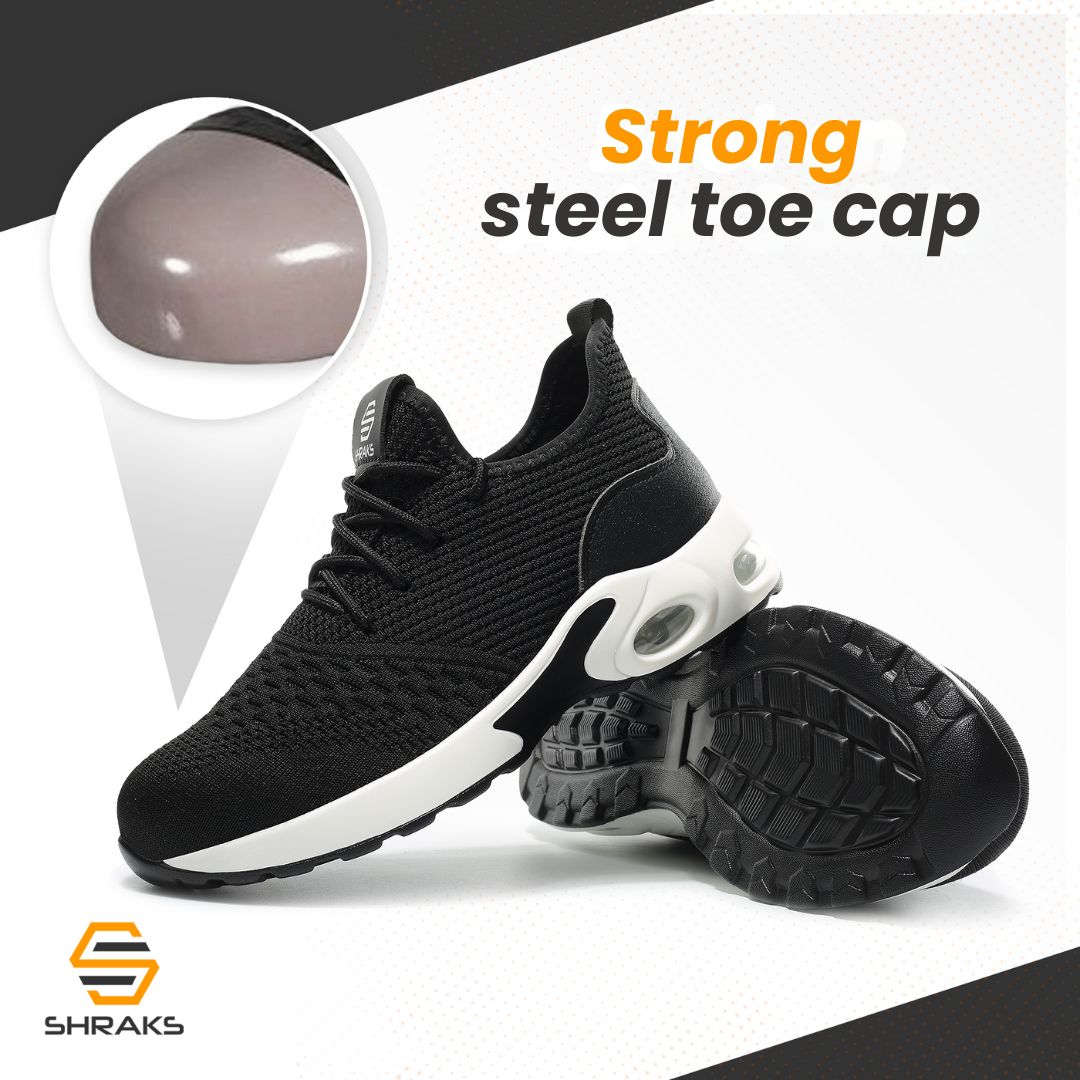
- Protection: Toe cap (steel or composite), puncture resistance (Kevlar/composite), slip-resistant outsole for wet and slick floors.
- Comfort: Cushioned midsole setup, ergonomic footbed, toe room, low weight and balanced flex.
- Functionality: Slip resistance (SRC), oil and fuel resistance, anti-static, thermal insulation as required.
The longer you stand or walk, the more cushioning, fit and breathability matter. Outdoors, a higher collar and sealed tongue help fend off splashes.
Standards and tests: S1P, S3 and what WR means
The EN ISO 20345 defines safety requirements. For wet conditions, two aspects are key: S classes with water features (S2/S3) and the additional WR marking (whole shoe waterproof). Here’s how the classes stack up:
| Class | Puncture resistance | Toe protection | Water feature | Typical use |
|---|---|---|---|---|
| S1P | Yes | Yes | No stated wet protection | Dry indoor areas |
| S2 | No | Yes | WRU (water-repellent upper) | Light moisture, short exposure |
| S3 | Yes | Yes | WRU (as S2) + lugged outsole | Outdoors, changeably wet |
| S3 + WR | Yes | Yes | WR (whole shoe waterproof) | Prolonged wet conditions |
WRU means the upper absorbs very little water, but the whole shoe isn’t automatically waterproof. WR denotes proven waterproofness of the entire shoe. It’s verified with standardized water ingress and flexing tests where the footwear is repeatedly flexed under water. Only if no unacceptable ingress is found may the shoe bear the WR mark. A compact overview is in S1P vs. S3: safety classes compared.
Decision aid: In wet indoor areas S2 often suffices; outdoors S3 is sensible. If you regularly work in wet conditions for longer periods, S3 with WR is the safe choice. What to focus on with S3 is covered in S3 safety shoes: what really matters. Suitable models for prolonged wet areas are under S3 safety sneakers for wet workplaces.
Buying guide: how to choose the best waterproof safety sneakers
Use this checklist to get to the right choice quickly. It summarizes field-proven recommendations as criteria:
- Use environment: For occasional rain S3 with WRU may suffice; for prolonged wet or puddles choose S3 with WR and a higher collar.
- Floor conditions: On slick, wet surfaces prioritize SRC slip resistance; for oily floors opt for oil- and fuel-resistant soles.
- Comfort and fit: Adequate toe height, cushioned midsole, breathable membrane. Try on with your work socks.
- Weight and flexibility: Light, flexible models like the light S3 safety shoes reduce fatigue on long shifts.
- Materials: Hydrophobic leather for durability or technical synthetics for low weight and quick drying.
- Construction: Gusseted tongue, neatly sealed seams, raised sidewalls in splash zones.
- Verify certification: Look for precise markings (e.g., S3 WR, SRC). Without WR, the shoe is generally not fully waterproof.
- Maintenance effort: Choose models that clean easily; available care and spare-part service is a plus.
Tip: Read manufacturer specs carefully. If waterproofing isn’t explicitly stated, it’s usually water-repellent rather than fully waterproof.
Ready to choose? Explore the sporty S3 safety shoes and filter by S3, WR or use case.
Care and maintenance: keep your sneakers waterproof longer
- Cleaning: Remove dirt after shifts with lukewarm water and a soft brush. Avoid harsh cleaners.
- Drying: At room temperature, stuffed with newspaper. No direct heat sources like radiators.
- Reproofing: Regularly apply suitable sprays or waxes, especially for leather.
- Inspection: Check seams, tongue and transitions. Repair damage early.
- Storage: Cool, dry, well-ventilated. A second pair for rotation extends lifespan.
FAQ about waterproof safety sneakers
Which work shoes are waterproof?
Truly waterproof models carry the WR (Whole Shoe Water Resistant) mark under EN ISO 20345. S2 and S3 offer only WRU on the upper. For prolonged wet conditions choose S3 with WR, ideally with a gusseted tongue, sealed seams and an SRC slip-resistant sole.
Which is better, S1P or S3?
For wet conditions, clearly S3. S1P is intended for dry indoor areas and has no wet protection. S3 combines puncture protection with WRU on the upper and a lugged sole. If you work wet regularly, also look for the WR mark for the whole shoe.
Are waterproof shoes really waterproof?
Yes, provided they pass the WR test under EN ISO 20345. The shoe is repeatedly flexed at a defined water level and checked for ingress. Note: Waterproof doesn’t mean airtight. Quality membranes keep water out and let sweat vapour escape.

Leave a comment
This site is protected by hCaptcha and the hCaptcha Privacy Policy and Terms of Service apply.