


What are safety sneakers and how do they differ from regular sneakers? In short: they are EN ISO 20345–certified safety shoes with a sporty look. They combine features like toe protection, puncture resistance and slip-resistant outsoles with low weight, cushioning and breathable materials. This makes them ideal for jobs where you walk a lot, act quickly and rely on comfort without sacrificing safety. Typical use cases include logistics, healthcare, hospitality, service and light trades. More on the benefits of safety sneakers at work.
How safety sneakers differ from classic work shoes
Safety sneakers are lighter, more flexible and usually more breathable than traditional safety boots. The fit is similar to sports shoes, which makes long shifts more comfortable. At the same time, they meet defined protection requirements such as toe caps and slip-resistant outsoles. The concept reaches its limits where extra stability, ankle protection or lasting water protection is required. On rough construction sites or when working in mud, mid-cut S3 models or boots are often the better choice. If your work mostly takes place indoors in dry areas or involves a lot of movement, safety sneakers really shine.
Protection classes and standards under EN ISO 20345
The EN ISO 20345 standard defines minimum requirements. You can find a detailed overview here: safety classes (SB, S1P, …) explained. Key classes and abbreviations:
- SB: Basic requirements including a toe cap rated to 200 joules.
- SBP: SB plus puncture resistance in the sole.
- S1: Like SB, plus closed heel, heel energy absorption and antistatic properties.
- S1P: S1 plus puncture resistance, very common in safety sneakers.
- S2: Like S1, plus upper with limited water absorption, useful for occasional moisture.
- S3: Like S2 plus puncture resistance and a profiled outsole, standard for construction and tougher outdoor terrain.
- SRC: Slip resistance tested on ceramic tile with soap solution and on steel with glycerin.
- ESD: Dissipation of static electricity, important in electronics manufacturing and for sensitive components.
Why S1P is so popular and what it means in everyday use: S1P standard: protection and comfort in a sneaker format.
Key features of modern safety sneakers
Current models focus on comfort and efficient protection without looking bulky. Learn more in innovative features of modern safety sneakers. Pay special attention to:
- Toe cap: Steel is robust and slim; composite is lighter and insulates against cold, ideal when passing metal detectors.
- Puncture resistance: Textile midsoles are light and flexible, protecting against nails and splinters.
- Slip resistance: SRC tread outsoles offer grip on smooth, wet and oily floors.
- Cushioning: EVA or PU midsoles reduce fatigue during long shifts.
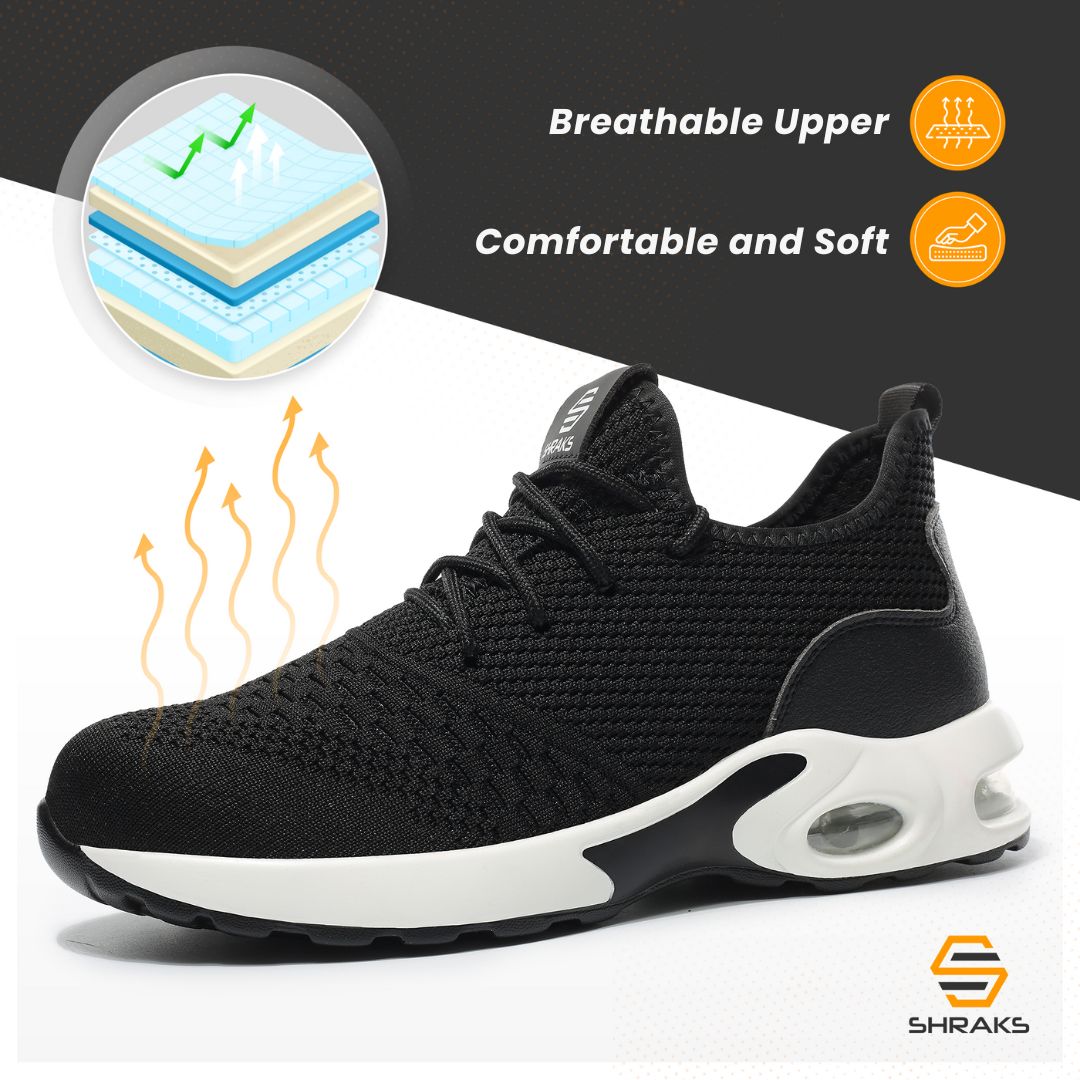
- Breathability: Mesh or textile uppers keep feet drier for longer.
- Water resistance: Water-repellent uppers suffice for splashes; for constant wet conditions choose higher-cut S2/S3 models.
- Closures: Classic laces or dial systems for quick on/off.
- Weight and flex: Light, flexible soles increase agility and comfort.
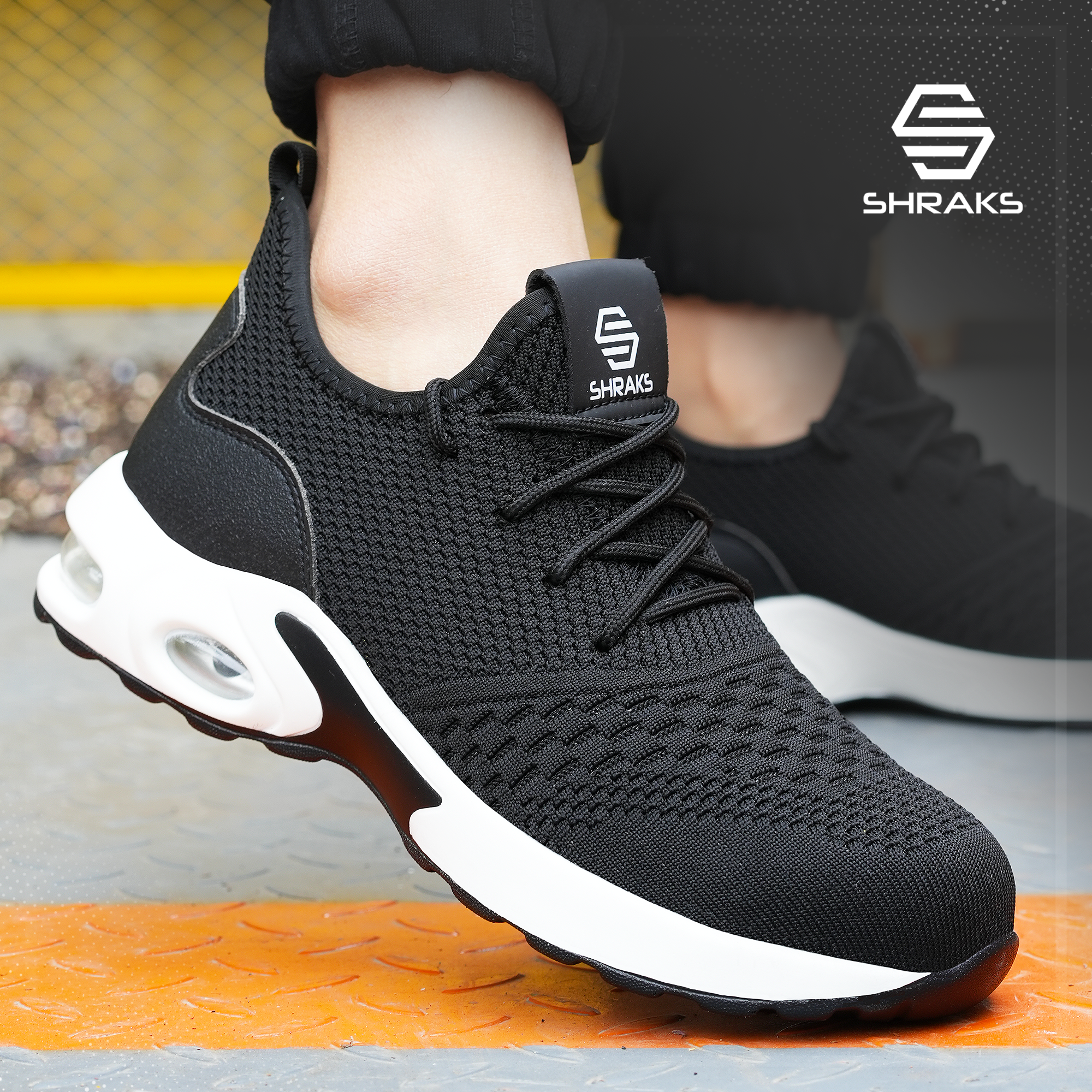
At shraks.de you’ll find safety sneakers like Shraks Stride, Venu, Moon and Moda with ISO 20345 S1P certification, steel toe, puncture protection and breathable materials.
Which jobs are safety sneakers suited for
Because they combine protection and freedom of movement, safety sneakers suit many roles:
- Warehousing and logistics: Lots of walking, frequent kneeling and fast work on smooth industrial floors.
- Healthcare: Light, quiet, hygienic and slip-resistant on clinical floors.
- Hospitality and hotel: Slip resistance in kitchen and service, sporty look front of house.
- Service, light trades, assembly: Flexibility and cushioning for varied tasks in dry environments.
- ESD environments: ESD models protect sensitive electronics from static discharge.
On shell construction sites or in civil engineering, S3 with a higher shaft is usually required. Always check the risk assessment for your workplace. More guidance: choose the right safety sneaker for your workplace.
Metal-free or with steel toe
Steel toe caps are very robust and usually a bit cheaper, but noticeably heavier and more conductive to cold. Metal-free variants with composite toe protection and a textile puncture plate are lighter, thermally more comfortable and detector-safe, which is practical in logistics hubs or airports. Choose based on environment, wearing time and preference.
Fit and care in brief
- Size and width: Try safety sneakers in the afternoon with work socks. Your toes need a little room.
- Insoles: Use insoles for comfort or orthotic needs per BGR 191.
- Break-in and socks: Functional socks reduce friction; short break-in periods help the materials settle.
- Drying and cleaning: Air dry, no radiators. Remove dirt regularly, check cushioning and tread.
- Replacement: Replace if visibly damaged, after heavy impact on the toe cap, or when slip resistance is worn.
FAQ on safety sneakers
What are safety shoes
Safety shoes are EN ISO 20345–certified work shoes with defined protective functions. Safety sneakers are a sporty subtype. They offer the same basic protection but are lighter, more flexible and closer in look to sports shoes.
What do S1, S2 and S3 mean
S1 stands for toe protection, closed heel, heel energy absorption and antistatic properties. S2 adds a water-repellent upper. S3 is S2 plus puncture resistance and a profiled sole, suitable for more demanding environments.
What’s the difference between SB and S1
SB covers the basic requirements including a toe cap. S1 goes further and additionally requires a closed, energy-absorbing heel and antistatic properties. SBP is SB with puncture resistance, S1P is S1 with puncture resistance.
Who pays for safety footwear
If safety footwear is mandatory, it’s usually provided by the employer. In some cases there are allowances or budget options. Self‑employed workers can often deduct the cost as a business expense.
Ready for more comfort and protection at work? Discover Shraks safety sneakers like Stride, Venu, Moon and Moda. Free express shipping from €50, 60‑day returns, orders placed by 23:45 ship the same day, delivery in 1–2 working days. Attractive volume discounts from 5 pairs for businesses.

Leave a comment
This site is protected by hCaptcha and the hCaptcha Privacy Policy and Terms of Service apply.