

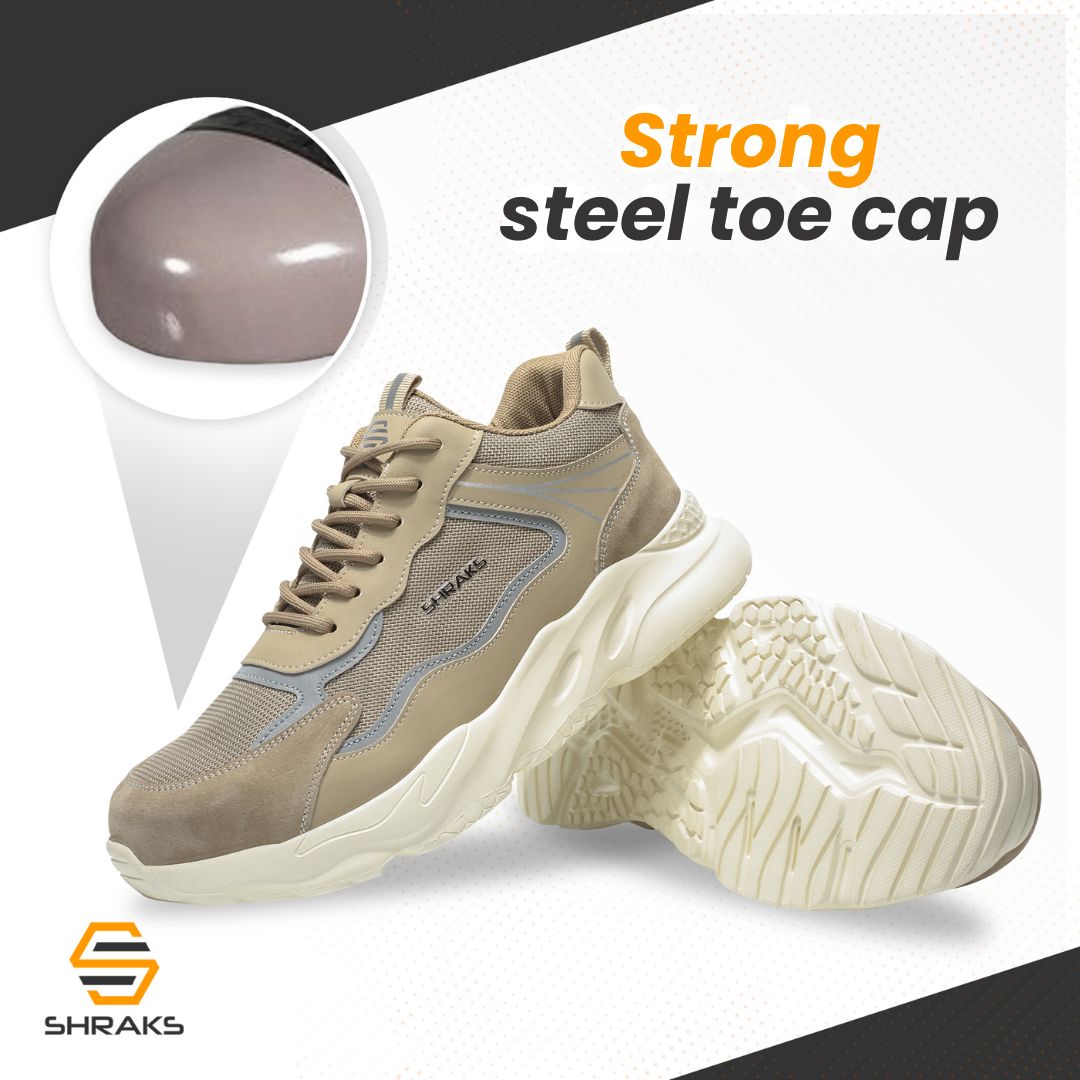
The right size for steel‑toe safety sneakers determines comfort, support, and protection. Here’s how to measure your foot length correctly, why forefoot width matters with a steel toe, and how to simulate real work conditions when trying on. For Shraks models: they run true to size, come in EU 35–47, and comply with EN ISO 20345. Find more help on model choice and fit in our buying guide for steel‑toe sneakers.
Measure length and size correctly
Measure your feet in the late afternoon, when they’re at their largest. Stand with your heel against a wall on a sheet of paper, mark the longest point of your foot, and measure the distance in millimeters. Repeat for both feet and use the larger value. As a rule of thumb, allow 7–10 mm of toe room. Compare the result with your usual EU shoe size. Since Shraks steel‑toe safety sneakers run true to size, you can generally pick your normal size.
- Measure feet in the afternoon
- Measure both feet, use the larger value
- Allow 7–10 mm toe room
- Check against your usual EU size
Width with steel‑toe sneakers: what to look for
The steel cap sets the forefoot shape and doesn’t stretch. That makes width a key factor for comfort and safety. Too narrow means pressure on toes and cap, causing numbness or friction. Too wide leads to slipping, instability, and faster fatigue. Ensure your toes can lie side by side without lateral pressure and the midfoot is hugged without pinching. More background on construction, protection classes, and fit is available in our safety sneaker explainer.
- Signs it’s too narrow: pressure on the little toe, numb toes, early fatigue pain
- Signs it’s too wide: heel slip, sideways sliding in the forefoot, insecure rollover
- Consider insoles: they change volume and often effective width
If you have wide forefeet, wear thick work socks, or your feet swell noticeably, also try the next size up. The heel must be secure and the midfoot well supported, while toes have 7–10 mm at the front. Don’t oversize: excess length can reduce protection because your foot may slide forward on impact. Find more practical tips in our guide to preventing foot discomfort.
Try on like on the job
Try safety shoes the way you’ll wear them at work. This makes fit more realistic and helps avoid returns.
- Wear your typical work or performance socks
- Try on in the late afternoon when feet are swollen
- Lace snug but comfortable and walk for a few minutes
- Test two sizes and different models if needed; fits vary
Find specific fit pointers for work sneakers in our fit and sizing guide.
The finger test
Stand up, shift weight forward, and check the gap between your longest toe and the cap. About one finger laid sideways equals 7–10 mm of room. At the same time, your heel shouldn’t lift when walking and the midfoot shouldn’t “swim” laterally. That confirms length and width are right.
Sizing notes for Shraks safety sneakers
Shraks steel‑toe safety sneakers fit true to size. Order your usual EU size. All models are available in EU 35–47 and meet EN ISO 20345 for protection, slip resistance, and penetration‑resistant construction. Compare lasts and available sizes in our safety sneaker range. If you use orthotic insoles or thick winter socks, consider ordering an extra size to compare.
Shraks models: Stride, Venu, Nova, Moda, and Moon. Free shipping from €50, easy 60‑day returns. See the relevant page for returns and exchanges if sizing is off. Sizing questions? Contact support@shraks.com or 085 000 7777, Mon–Fri 09:00–17:00.
FAQ
What size should I choose for safety shoes?
Measure your foot, allow 7–10 mm toe room, and compare with your usual EU size. Shraks sizing is generally true to size, so your standard size should fit. If you use insoles or thick socks, try a second size for comparison.
Should I go up a size with steel‑toe safety shoes?
Only for specific reasons such as wide forefeet, strong swelling, very thick socks, or insoles. Oversizing reduces support and safety. Better: try on realistically and use the finger test.
How much space should be in front of a work shoe?
About 7–10 mm between the longest toe and the steel cap. This prevents toe bumping under load and gives room to move without your foot sliding.
Do safety shoes fit differently by brand?
Yes, fit varies by last and materials. Don’t rely only on a familiar number—check length and width by measuring, trying on with your work socks, and doing the finger test. Shraks models are true to size.


Leave a comment
This site is protected by hCaptcha and the hCaptcha Privacy Policy and Terms of Service apply.