

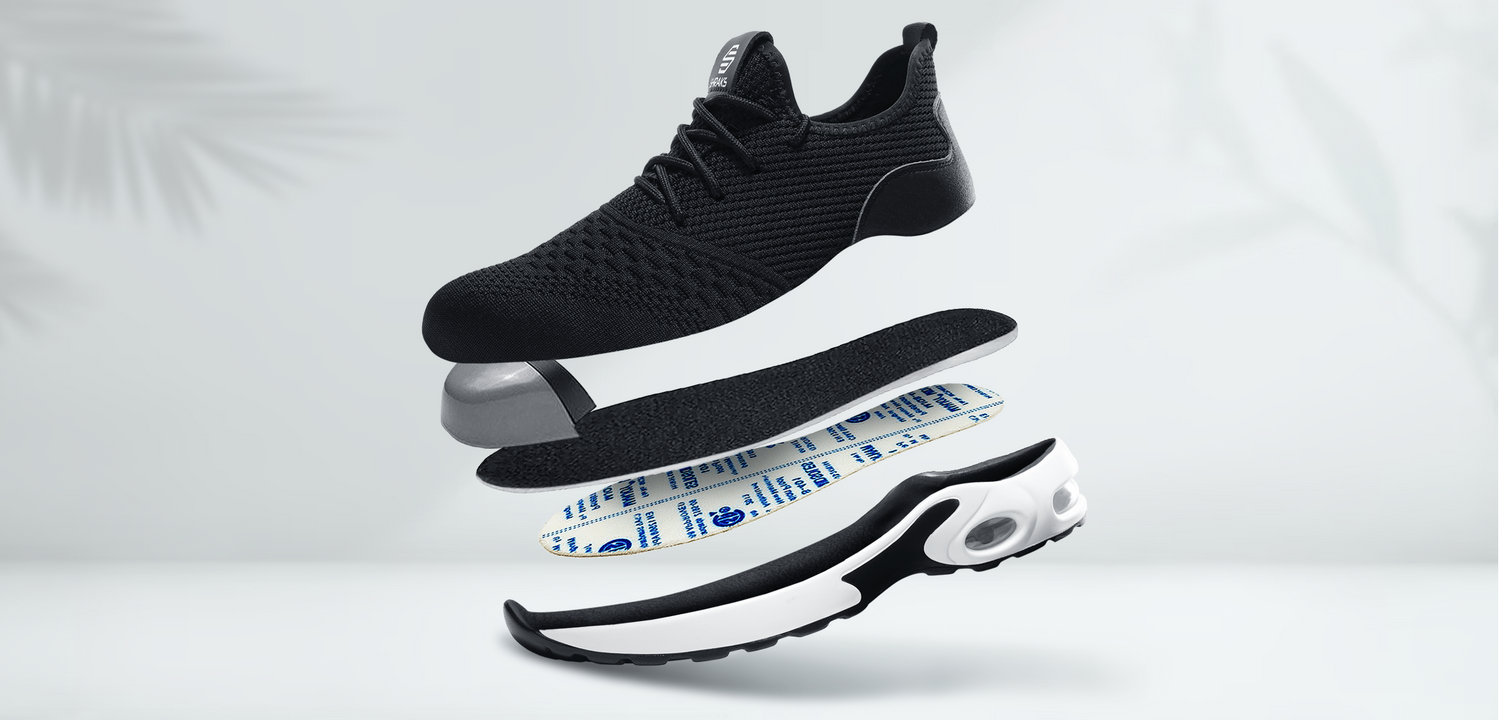
A lightweight safety shoe combines standard-compliant protection with the lowest possible weight so you can work longer in a relaxed, agile and safe way. The decisive factors are the materials and construction of toe cap, puncture protection, sole and upper. The less mass for the same level of protection, the less fatigue, the better mobility and the more noticeable all-day comfort.
How to really spot lightweight safety shoes
Most of the weight sits in the toecap, puncture protection and outsole. Composite or aluminium caps typically save weight compared with steel, modern textile-based puncture-resistant layers are lighter than metal inserts, and EVA or PU soles with an energy-absorbing core provide cushioning at low mass. The upper matters too: knitted mesh, microfibre or technical textiles are usually lighter and airier than full-grain leather. More details on breathable safety shoes.
Look for a flexible yet abrasion-resistant outsole with a grippy tread, a lightweight midsole with rebound, and a breathable lining. ESD properties, slip-resistance ratings and heat- or fuel-resistant soles increase real-world usability without necessarily adding weight. Also check whether the fit is right and the cushioning suits your surface, because good ergonomics make shoes feel subjectively lighter.
Safety classes at a glance: SB, SBP, S1, S1P, S2, S3
SB is the base class under EN ISO 20345 with a protective toecap. SBP adds puncture protection. S1 adds a closed heel, antistatic properties and energy absorption in the heel area; S1P combines this with puncture protection. S2 equals S1 with additional water absorption and penetration resistance of the upper for damp environments. S3 adds puncture protection to S2 and usually a more aggressive tread for construction sites and outdoor use.
You'll most often find lightweight shoes in S1P, because dry indoor areas need fewer water-related features. There are, however, also lightweight S3 models when modern textiles and composite components are used. Choose the class based on your risk and environment profile, not just on weight. Reading tip: S1P standard: lightweight safety shoes.
For a compact overview of all standards: Understanding safety classes: make the right (lighter) choice.
Lightweight vs. robust: the right choice by application
Logistics, warehousing, courier services and indoor assembly benefit from lightweight S1P sneaker styles. You move a lot, take many steps and you'll feel every gram less immediately in your knees and back. More here: Sneaker safety shoes with innovative, lightweight materials.
Hospitality and healthcare need slip-resistant soles, breathability and long wear times. Lightweight, cushioned S1P or SBP models with a sporty fit are ideal here, provided there's no permanent liquid exposure.
Interior finishing and electrical work often prefer ESD-capable, flexible S1P shoes with textile puncture protection. For wet outdoor areas or construction sites, S3 models make sense. Then focus on lightweight cap materials, textile puncture protection and weight-optimised soles to keep overall weight low despite higher protection requirements.
Everyday benefits of lightweight safety shoes
Less weight means less fatigue, quicker steps and better agility in tight or changing work environments. You benefit from a more natural rollover, reduced joint load and often better heat dissipation when light, breathable uppers are used. For warm conditions see: Summer work boots: light and airy.
Lightweight models also make frequent bending, kneeling and stair climbing easier. In sum, that boosts comfort, focus and productivity because you can concentrate on the job instead of on heavy shoes. Practical reasons here: Why safety-shoe sneakers are a must for modern workers.
Lightweight models at Shraks
At Shraks you'll find lightweight, sporty safety shoes that combine protection and sneaker comfort. Shraks Stride offers the robust all-round entry in a sneaker look. Shraks Venu focuses on particularly breathable materials and flexible cushioning. Shraks Moda combines lightweight S1P protection features with a clean, urban design. Shraks Moon delivers a steel toe cap and textile puncture protection in a modern, lightweight build.
All models follow EN ISO 20345 and are S1P certified. You order with free express shipping from €50 and a 60-day return policy.
FAQ
Which safety shoe is the lightest
That varies by size and features. Especially light are models with composite or aluminium caps, a textile puncture-resistant layer and an EVA or PU midsole. Check manufacturer weight data per size and compare within the same protection class.
What is the difference between SB and S1
SB provides the basic EN ISO 20345 requirements with a toecap. S1 adds a closed heel, antistatic properties and energy absorption in the heel area. If you work mainly in dry conditions, S1 is often the more sensible, practice-oriented choice.
What are the lightest S3 safety shoes
Lightweight S3 models often use composite caps, textile puncture protection and weight-optimised soles. They combine water resistance and puncture protection with modern material technology. Check weights in size 42 or your reference size for a fair comparison.
What is a lightweight hiking shoe
A lightweight hiking shoe is designed for trail comfort and traction, but without a toecap and puncture protection. For occupational risks you need a lightweight safety shoe to EN ISO 20345 that additionally protects against impact and puncture hazards.


Leave a comment
This site is protected by hCaptcha and the hCaptcha Privacy Policy and Terms of Service apply.