

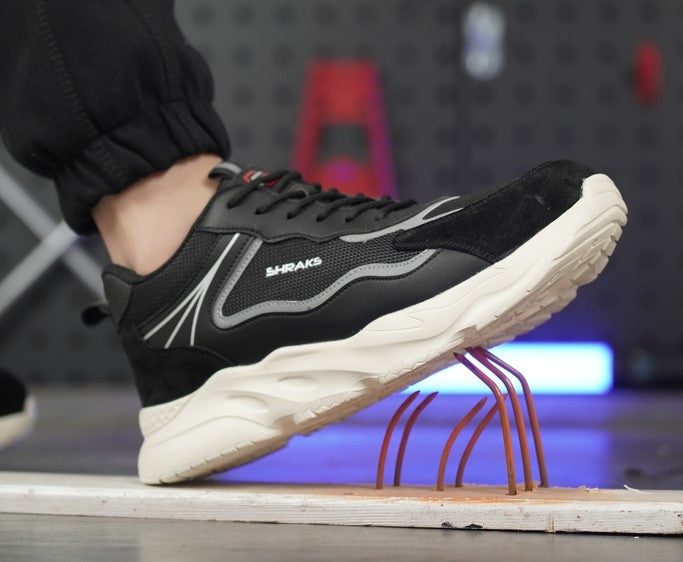
You want to get in fast, walk safely and stay comfortable all day. But which system delivers the better all-round package: a BOA closure or classic laces? Here’s a clear, practical comparison for everyday wear and work so you can make your next shoe choice with confidence. If you’re new to the topic, this overview on What are safety sneakers? Features & construction gives you the basics.
Fit and comfort in daily life and at work
Comfort starts with a secure fit over the instep. BOA excels with fine micro-adjustment across the midfoot. That helps relieve pressure points and lets you quickly tweak the fit during the day, for example when your feet swell. Laces are maximally flexible in distributing tension per eyelet. Especially for wide feet or high insteps, you can loosen specific zones, creating a very natural pressure profile. For long shifts it matters that tension stays consistent: the more stable it is, the less you need to readjust. BOA has the edge here if you frequently switch between sitting, walking and kneeling. Laces shine when you truly tailor your lacing to your foot. For detailed tips on fit, pressure points and support, see our guidance on fit and sizing for steel-toe sneakers.
What is a BOA closure?
The BOA Fit System consists of a dial, lightweight cables and low-friction guides. Turn to tighten the shoe with millimetre precision; pull the dial to open instantly. The big benefit is even pressure distribution and fast, precise adjustment—even with wet hands or gloves.
How to operate the BOA closure
Push to engage, turn to tighten, pull to release. Small clicks are enough to dial in the exact tension you want.
Pros and cons at a glance
Both systems have clear strengths. The overview below helps you set priorities. For a compact look at alternatives, see our guide to innovative closure systems on safety sneakers.
| Criterion | BOA closure | Laces |
|---|---|---|
| Fine-tuning fit | Micrometric, even | Highly flexible per eyelet |
| Speed | Very quick on/off | Slower, more steps |
| Use with gloves | Easy to operate | Harder, depends on knot |
| Tension consistency | Stays stable | May loosen over time |
| Failure behavior | System-specific, needs repair kit | Easy lace replacement |
| Dirt and moisture | Robust, low water uptake | Laces absorb moisture |
| Cost | Usually higher due to system | Low cost |
On-site practice in construction and trades
In daily work, fast and safe operation matters. BOA lets you readjust in seconds without retying—useful if you often move between indoors and outdoors or wear protective gloves. Field reports highlight advantages in usability, even lockdown and stability of the fit. Quick opening after your shift is another plus. Laces remain a solid, proven solution: they work without a mechanism, are easy to replace and allow very individualized pressure per eyelet. What’s crucial is that the shoe as a whole meets the standard and gives you support.
Durability, care and repair
BOA components are built for tough use and are resistant to moisture and dirt. If something is damaged, the system can be replaced with kits depending on the manufacturer. Check warranty and service notes. Laces wear faster mechanically but are inexpensive and universally replaceable. For both systems: keep guides, eyelets and the upper free of debris, check regularly for abrasion and replace parts in time. That keeps fit stable and safety intact.
When are laces the better choice?
Laces excel when you need maximum zonal adjustment or have very specific foot shapes. You can loosen or tighten precisely at critical spots without changing the whole shoe. If you prefer absolute independence from a mechanism or want the lowest ongoing costs, laces are a good pick. For jobs with little need to readjust and set routines, they reliably deliver what you need. If you want speed and consistent tension throughout the day, BOA pulls ahead. For specific model and closure selection, our buyer’s guide helps you choose the right closure for your work sneaker.
FAQ about BOA closure vs laces
Is the BOA system better than laces?
It depends on your use case. BOA is faster, more precise and more stable in tension. Laces are cheaper, universally repairable and extremely adjustable per eyelet. Choose by priority: speed and consistency vs maximum individualization and simplicity.
What is a BOA closure on shoes?
A dial with cables and guides that tightens with millimetre precision and opens instantly by pulling. Benefits: even pressure and quick operation, even with gloves.
What do you call laces you don’t have to tie?
Often called no-tie laces, quick laces, elastic laces or bungee laces. They save time and offer elastic comfort but allow less fine zonal tuning than classic lacing.
How does a BOA closure work?
Press to engage the dial, turn clockwise to tighten, pull the dial to open. Fine-tune in small clicks until the fit is right for you.
Ready for the next step? Here you’ll find the safety sneaker overview – models with laces and BOA.


Leave a comment
This site is protected by hCaptcha and the hCaptcha Privacy Policy and Terms of Service apply.