

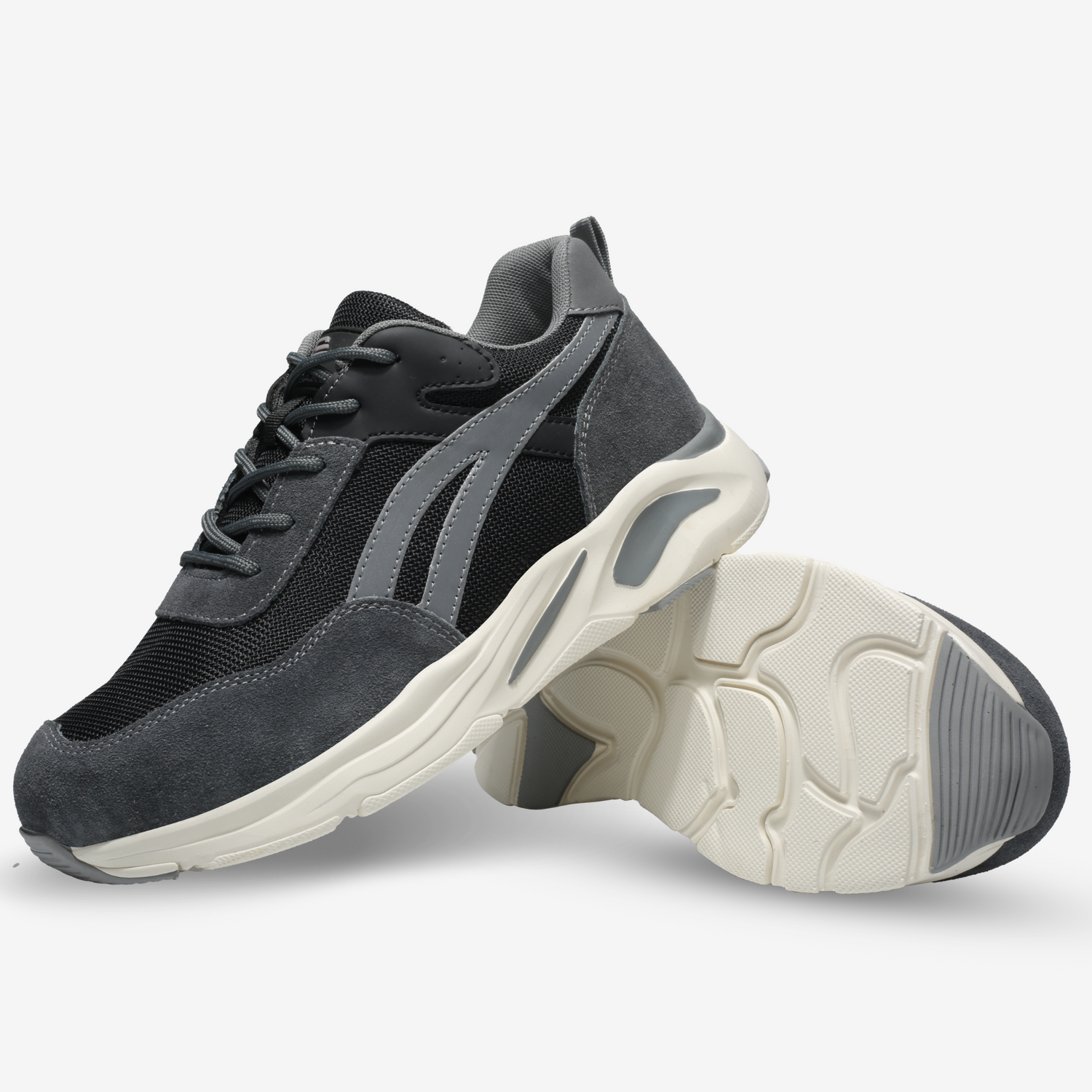
Want the light feel of sneakers but the full protection of a work shoe? This guide explains how safety sneakers and classic safety shoes really differ, which standards matter, and which option fits your job. With practical examples, a compact comparison table and clear selection criteria, you’ll make the right choice in minutes. For a short basic definition: What are safety sneakers?
Safety sneakers vs. safety shoes: the real difference
Safety sneakers combine a sporty look with certified protection under EN ISO 20345. They’re light, flexible and often highly breathable. Classic safety shoes emphasize maximum robustness, support and extra stability, for example in mid‑cut or waterproof models for tough outdoor conditions. The key isn’t looks, but your use case: lots of walking, climbing, loading & unloading often favors sneakers; heavy construction or outdoor work points to classic models with broader protection and more stability. More details on the respective product features: Innovative functions of sneakers vs. classic safety shoes.
Comparison at a glance
| Criterion | Safety sneakers | Classic safety shoes |
|---|---|---|
| Weight & agility | Very light, flexible, smooth roll | Usually heavier, focus on stability |
| Protection scope | Toecap, often S1P, ESD, good cushioning | Broad range up to S3, stronger all‑round protection |
| Support & ankle protection | Lower cut, agile | Also available mid‑cut, more lateral support |
| Climate/breathability | Often mesh textile, very airy | More leather/composite, climate‑stable, sometimes less airy |
| Water protection | Rarely fully waterproof | Many S2/S3 options, outdoor‑ready |
| Typical uses | Logistics, warehousing, indoor assembly | Construction, landscaping, industry, outdoors |
| Style | Sporty, sneaker‑like | Classic‑functional to robust |
Use cases: which option suits your job?
Logistics, warehousing, e‑commerce fulfillment: you move a lot on flat surfaces and need grip and comfort. Safety sneakers with S1P, ESD and cushioned soles are ideal.
Assembly and workshop: lots of standing and point risks from small parts. Lightweight safety sneakers with penetration protection P and SRC slip resistance work well.
Construction, shell construction, landscaping: uneven terrain, moisture, sharp objects. Classic S3 safety shoes with lugged outsole, puncture‑resistant midsole and possibly mid‑cut design are the more robust choice. What matters with sporty S3 models: Sporty safety shoes S3: what really matters?
Food service, cleaning, wet areas: slip resistance and moisture management are crucial. S2 or S3 with SRC outsole outperform airy sneaker models.
Electrical, ESD zones: look for ESD‑rated designs. Many safety sneakers perform very well here as long as there are no additional outdoor requirements.
Standards and classes in brief (EN ISO 20345)
EN ISO 20345 designates safety footwear with a toecap rated to 200 J. Key classes:
- SB: basic requirements with toecap.
- S1: SB plus closed heel area, antistatic, energy absorption in the heel.
- S1P: S1 plus penetration protection P.
- S2: like S1, plus water‑repellent upper.
- S3: S2 plus penetration protection P and a lugged outsole.
- ESD: dissipation of electrostatic charge – an additional requirement, not a separate class.
All class differences explained briefly: Safety classes explained: differences S1, S1P, S2, S3.
In short: S1P models are often sufficient for dry indoor areas. In wet and rough conditions, S3 provides additional protection.
Materials and protection features that really matter
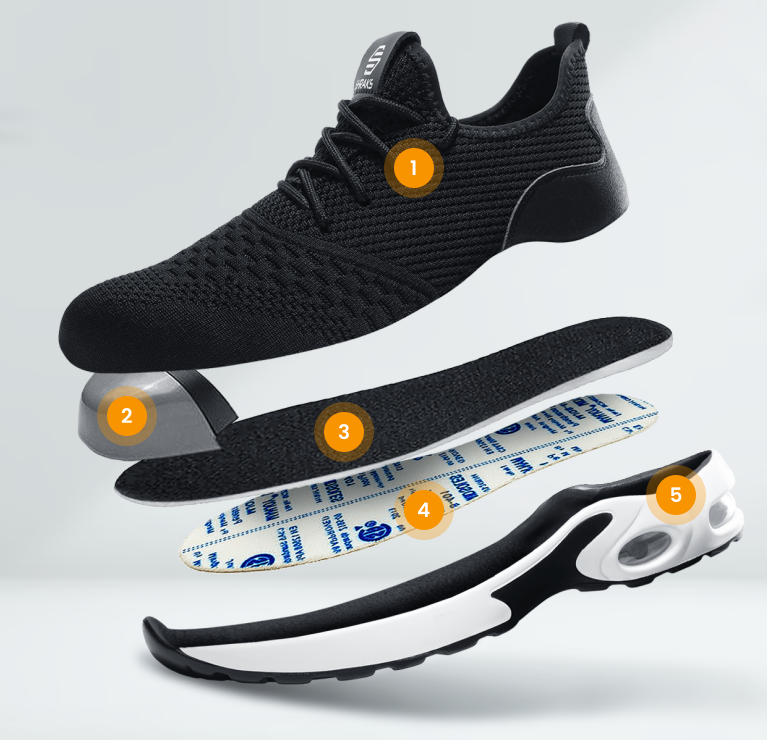
Upper: mesh textiles and microfiber keep weight low and breathe well – ideal for safety sneakers. Leather offers durable all‑round protection and is often better for changeable weather.
Toecap: steel is classic and very robust, aluminum lighter, composite metal‑free and temperature‑neutral – ideal for ESD and metal detection zones.
Penetration protection: steel midsoles are highly puncture‑resistant; textile P protection is lighter and more flexible. Choose textile for mobility, steel for maximum robustness.
Sole: SRC slip resistance is a daily must. PU, TPU or Vibram‑like compounds deliver grip, cushioning and abrasion resistance. Consider antistatic and ESD by zone.
Fit, comfort and ergonomics on the job
The best protection class is of little use if the shoe doesn’t fit. Try models in the afternoon when your foot is slightly wider. Ensure ample toe room, firm heel hold and the right width. Cushioned midsoles, breathable linings and removable insoles boost comfort on long shifts. Models adaptable under BGR 191 and compatible with orthotic insoles help prevent issues. For lots of movement, lightweight safety sneakers with a sporty roll are hard to beat. If comfort and look are crucial, this buying guide for the sneaker look helps.
Care tips for longer service life
- Remove dirt daily, air out insoles.
- Let textiles dry; don’t place on radiators.
- Clean and care for leather regularly; refresh waterproofing.
- Check tread; replace in time when heavily worn.
FAQ
What’s the difference between a safety shoe and a work shoe?
Work shoes protect in general but don’t necessarily have a toecap. Safety shoes under EN ISO 20345 always have a 200 J toecap and meet defined additional requirements such as antistatic properties, energy absorption and, depending on class, penetration and water protection.
Are safety boots better than safety shoes?
Safety boots offer more ankle protection, stability and often better weather protection – ideal for sites and outdoor use. Low‑cut safety shoes are lighter and more agile. The better option matches your use: rough terrain and wet conditions favor boots; lots of movement on flat surfaces favors low shoes or safety sneakers.
What’s the difference between S2 and S3?
S2 equals S1 plus water‑repellent upper. S3 equals S2 plus penetration protection P and a lugged outsole. If you work with sharp objects or on uneven ground, S3 is safer. For wet indoor areas, S2 may suffice.
What’s the difference between SB and S1?
SB covers the basics and includes a 200 J toecap. S1 adds a closed heel, antistatic properties and heel energy absorption. For most indoor workplaces, S1 is the more practical minimum.
At Shraks you’ll find sneaker‑style safety footwear that blends protection and comfort – such as Shraks Stride, Venu, Nova, Moon or Moda. They meet EN ISO 20345 in class S1P, with steel toe, penetration protection and breathable materials. Enjoy free shipping from €50 and 60‑day returns. Discover safety sneakers now.


Leave a comment
This site is protected by hCaptcha and the hCaptcha Privacy Policy and Terms of Service apply.