

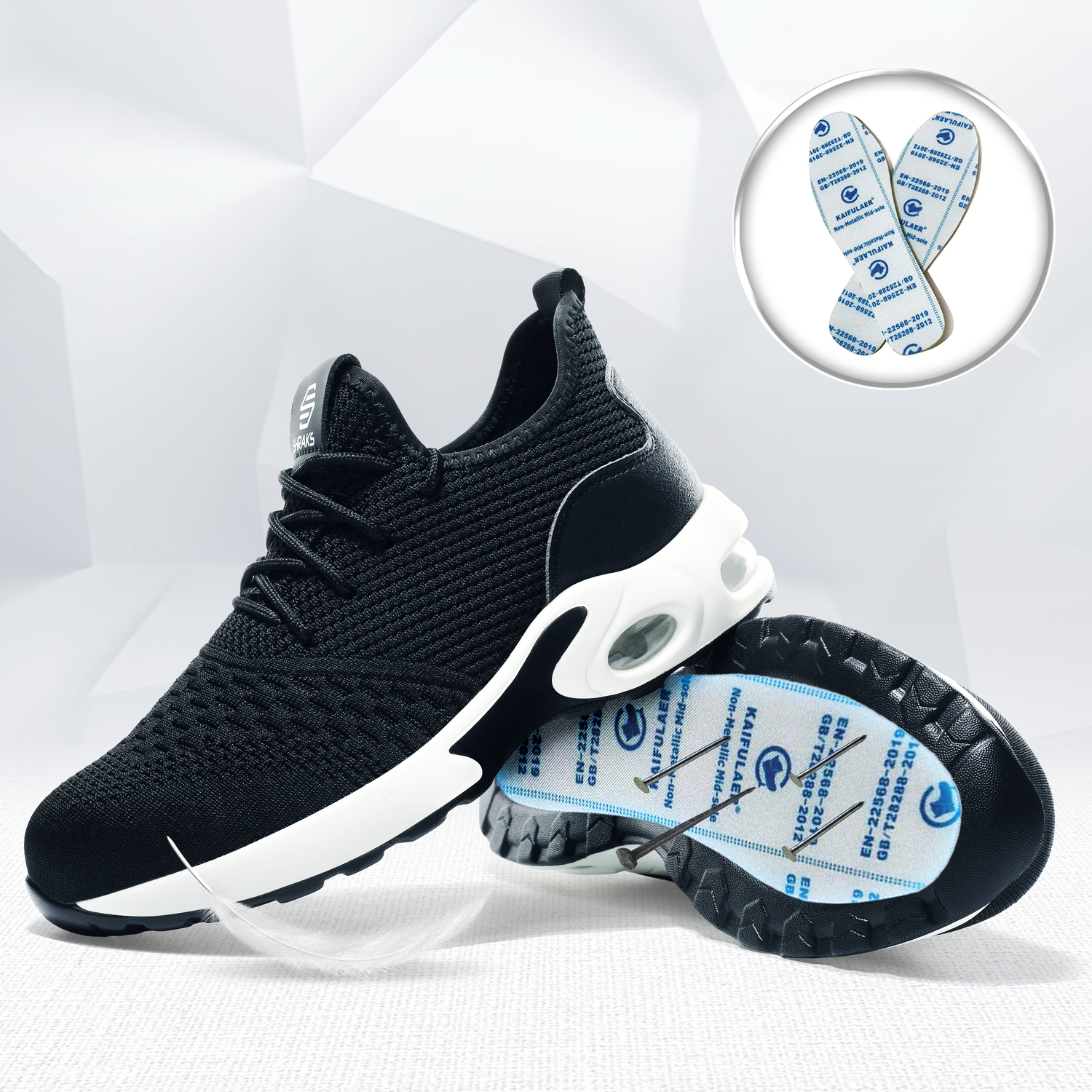
Less weight means more energy at the end of the day. In this comparison, you’ll learn from which weight a safety shoe is considered light, which protection classes typically weigh the least, and which design details truly save grams. This way you make an informed choice without compromising on EN ISO 20345, grip and puncture resistance.
More background: What is a light safety shoe?
Why weight matters: ergonomics, fatigue and safety
Light safety shoes reduce per-step load across thousands of movements per shift. That protects joints and back, lowers perceived fatigue, and keeps your focus high — a direct safety benefit. At the same time, lightweight design must never come at the expense of protection. Choose the right standard for your application and a well-thought-out cushioning system that disperses impact forces. Modern lightweight models combine breathable uppers with energy-return midsoles, giving you the feel of sporty sneakers while maintaining full work performance.
Weight by protection class: quick comparison
Ranges vary by size and features. These benchmarks help you gauge:
| Protection class | Typical weight per shoe | Core protection |
|---|---|---|
| S1 | approx. 500 - 580 g | Toe protection, heel energy absorption, antistatic |
| S1P | approx. 480 - 570 g | like S1 plus puncture resistance |
| S2 | approx. 520 - 600 g | like S1, plus limited water absorption |
| S3 | approx. 510 - 640 g | like S2 plus puncture resistance and profiled outsole |
| Boots S3/S5 | under 670 g possible | higher shaft, comprehensive water protection depending on material |
See a detailed overview: Protection classes for light safety shoes (S1/S1P/S2/S3).
Lightweight factors: material and construction
Total weight is the sum of many details. These factors make the biggest difference:
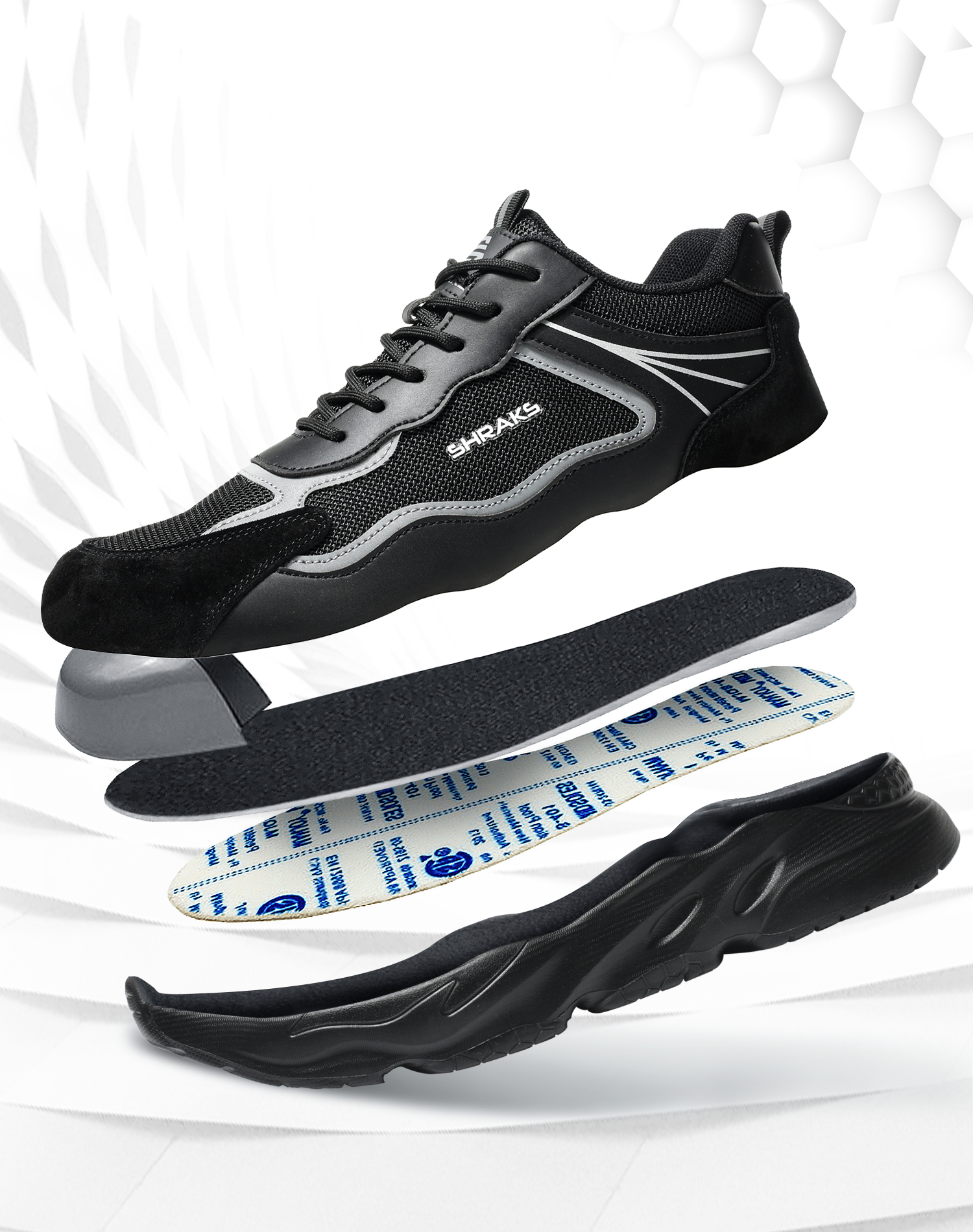
- Toe cap: composite caps usually save noticeable weight vs. steel, don’t conduct electricity and are better in cold. Steel excels with low profile and robustness.
- Puncture plate: textile midsoles are more flexible and often lighter than steel, cover the entire area and improve roll-off comfort.
- Midsole: modern PU and EVA blends with fine pores offer high cushioning at low weight. High-end foams with strong energy return deliver a sporty ride.
- Upper: technical mesh fabrics and microfiber reduce mass and boost breathability. Leather is durable but typically heavier. For maximum airflow despite a toe cap, see: Breathable steel-toe sneakers.
- Outsole: PU-PU is often lighter than PU-TPU; the latter adds abrasion resistance and grip.
- Cut and features: low-cut is usually lighter than mid or high. Every extra — from metal eyelets to toe bumpers — adds grams.
Which models are ultra-light — and where does Shraks fit?
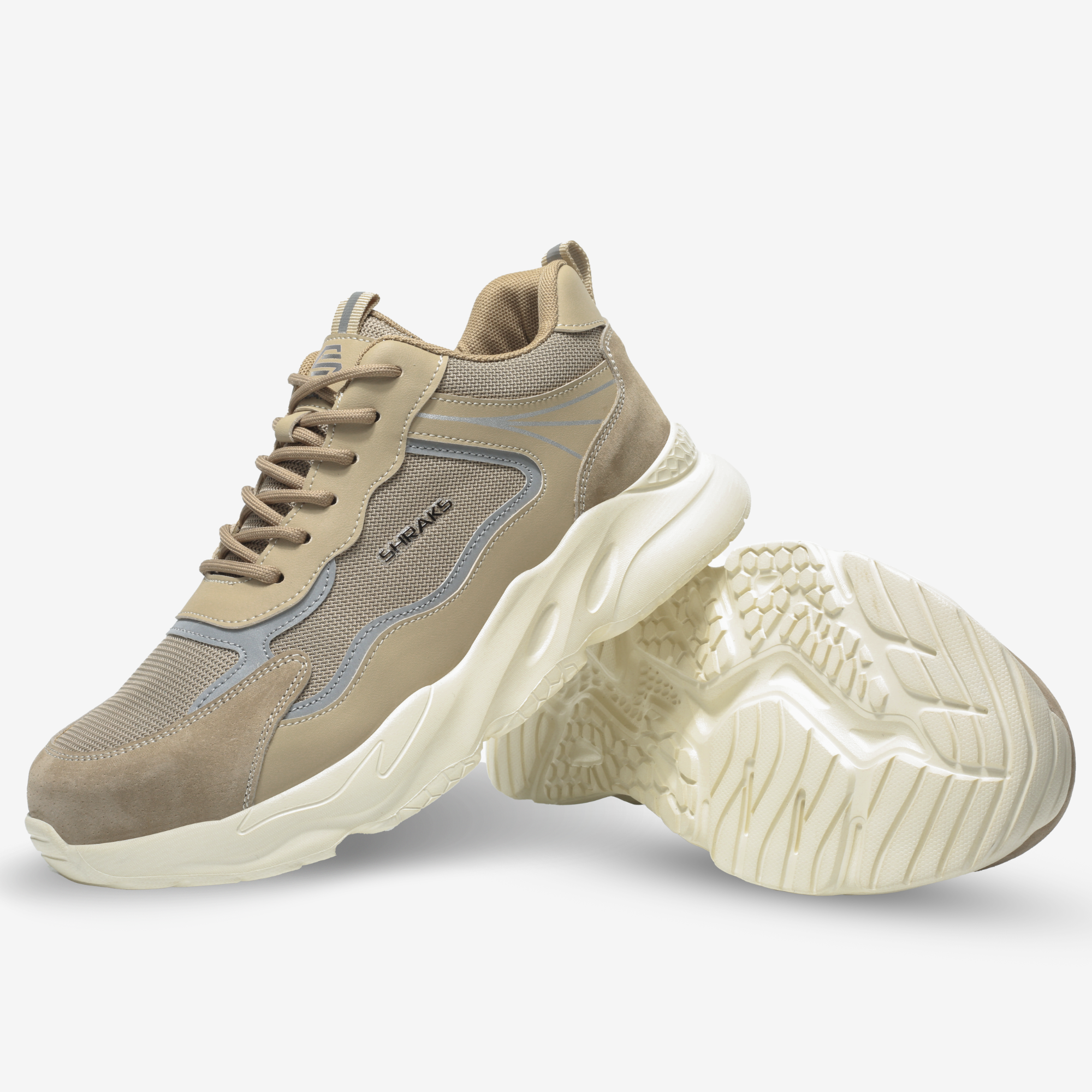
At the very light end you’ll often find S1P sneakers with textile puncture plates, airy mesh uppers and lightweight cushioning foams. Safety sneakers: discover especially light models. The more water and cut protection you add, the more weight tends to rise. At Shraks you get fashionable safety sneakers in S1P per EN ISO 20345 — with steel toe, slip-resistant sole and puncture resistance. Models like Shraks Moda, Moon, Nova, Stride or Venu blend style and protection for a light feel in daily work. Exact weight varies by size and features — best compare pairs on a scale.
Buying checklist for light safety shoes
- Assess use: dry hall, assembly, outdoor site or logistics — choose the right class.
- Set a target weight: under ~600 g per shoe is light, from ~480 g ultra-light.
- Materials: composite cap and textile puncture plate save weight — steel is extra robust.
- Cushioning and energy return: look for light, responsive midsoles for long shifts.
- Fit test in the evening: feet are slightly larger — try with your work socks.
- Slip resistance: don’t neglect SRC or the right floor classification.
- Breathability: mesh and perforations reduce heat build-up.
- Insoles: orthopedic, shock-absorbing insoles boost comfort with minimal added weight.
FAQ
Which safety shoes are the lightest?
Typically ultra-light are S1P models in sneaker style with textile puncture plates, responsive foam cushioning and thin-walled, stable uppers. The fewer extra water- and cut-resistance features, the lower the weight — provided EN ISO 20345 requirements remain met.
Which company has the best safety shoes?
There’s no single global market leader — different brands suit different industries and foot shapes. More important than the name are fit, standard, slip resistance and weight. Shraks focuses on light, stylish safety sneakers in S1P that combine protection and everyday wearability.
How much does a light safety shoe weigh?
Light models are about 500–600 g per shoe; ultra-light starts around 480 g — always depending on size and features. S3 models with more protection are often slightly above, but with modern materials can be surprisingly close to S1P weights.
Who is the market leader in safety shoes?
The market is fragmented, with strong manufacturers across regions and segments. What matters is which model gives you the best mix of protection, grip, weight and comfort in your use case. Use sizing advice and try-ons to find the personal leader for your feet.
Next steps: find your light pair at Shraks
Filter first by protection class and cut, then compare features and perceived weight when trying on. With Shraks you benefit from fast delivery, free shipping from 50 Euro and a 60-day return window — test comfort and lightness at work risk-free. For a fit-focused selection, see Light safety shoes for women. Or get inspired by our overview The best safety sneakers 2026.

Leave a comment
This site is protected by hCaptcha and the hCaptcha Privacy Policy and Terms of Service apply.