

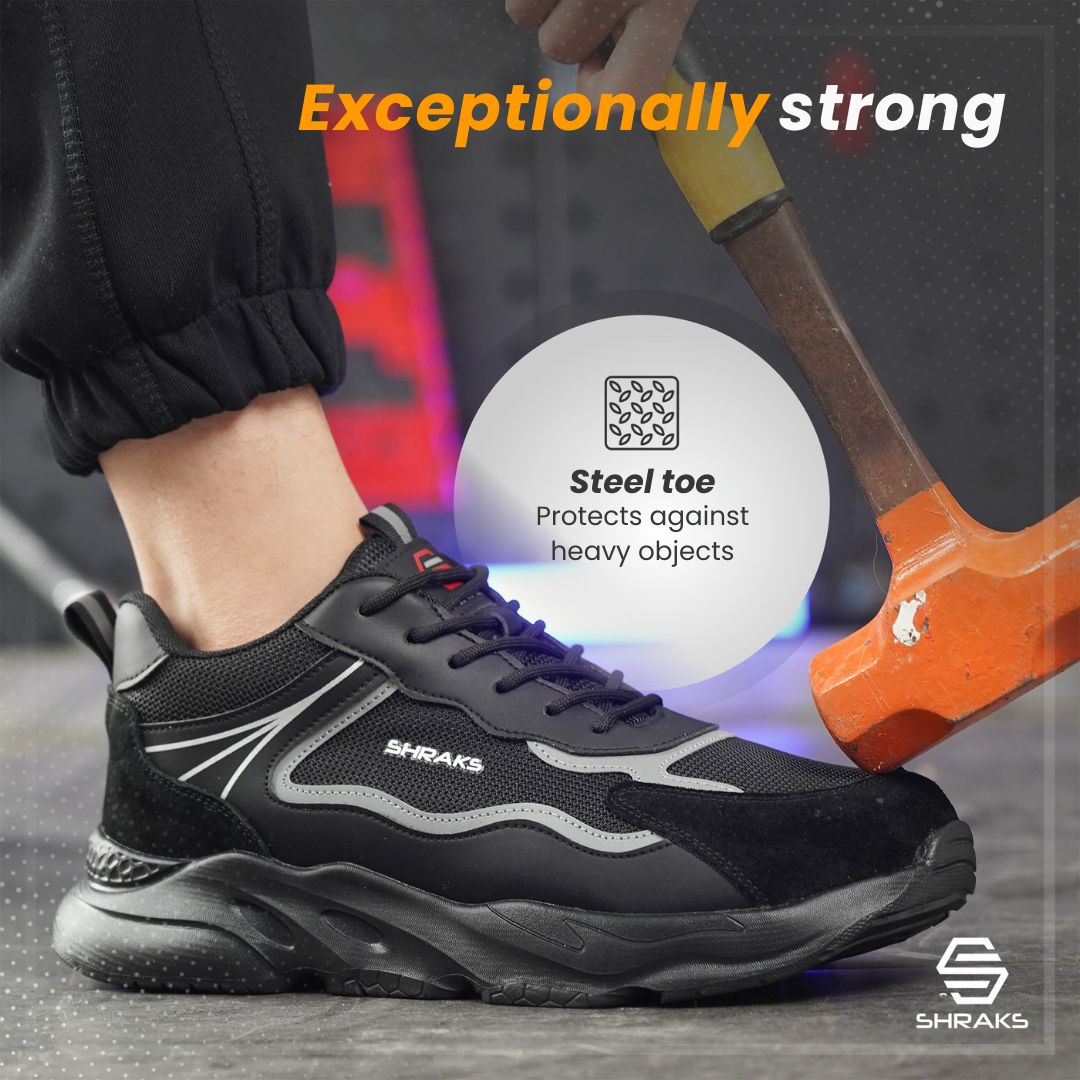
You want the protection of a steel toe and the comfort of modern sneakers. Breathable steel toe sneakers combine both. Learn more about climate comfort in hot conditions in Breathable safety shoes: optimal comfort in heat. Thanks to lightweight uppers like mesh and smart airflow management, your feet stay noticeably fresher during long shifts and warm days. At the same time, a steel or composite toe cap protects you and, depending on the standard, a puncture-resistant midsole keeps hazards at bay. These safety sneakers look like running shoes but meet EN ISO 20345 from S1P to S3 and are often ESD-capable. In this guide, you’ll learn what to look for, which standard suits your job, and how to find the best pair for your workday. For fundamentals, see Steel-toe sneakers: definition & benefits.
What breathability in safety sneakers really means
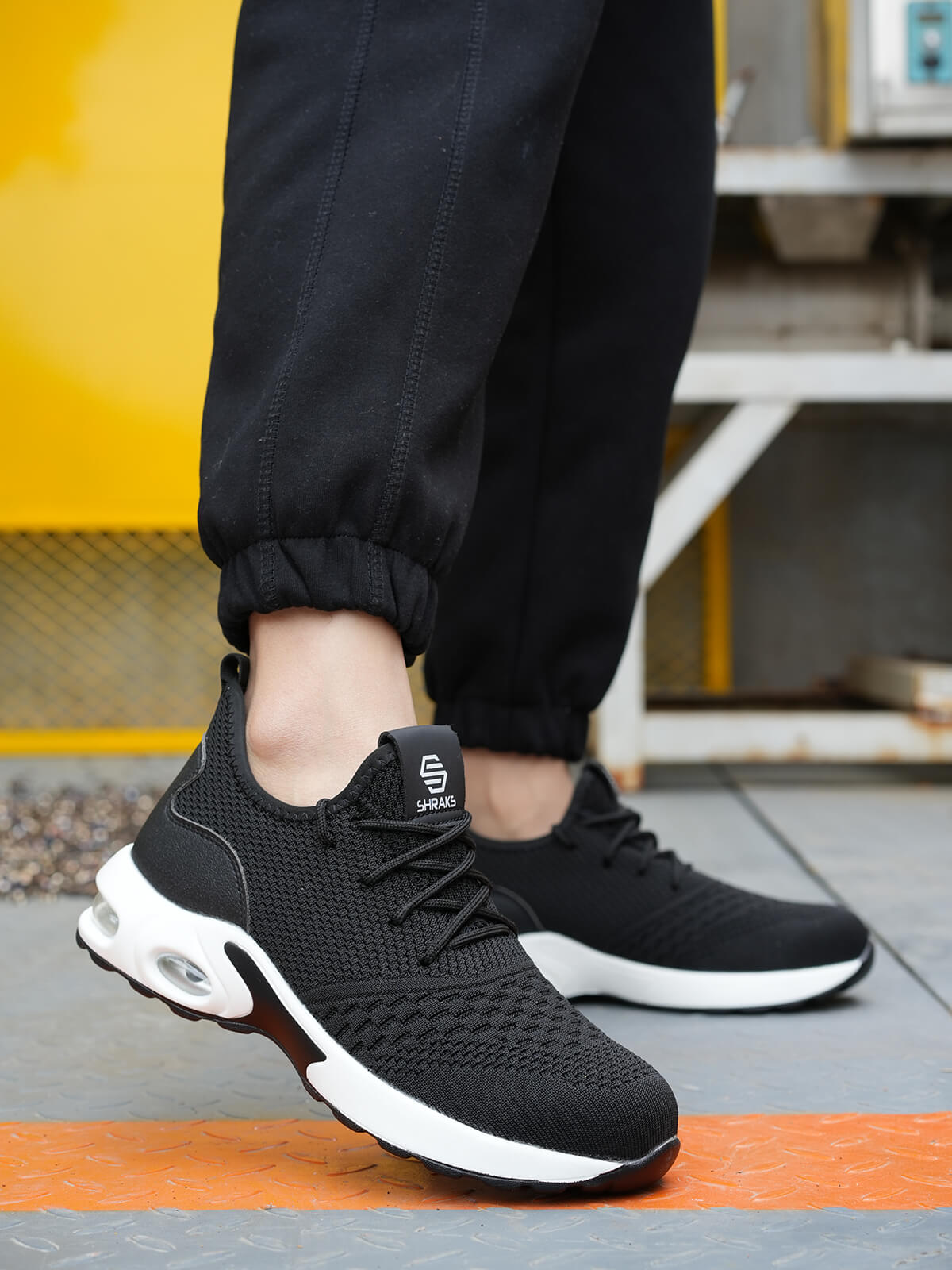
Breathable means moisture can escape the shoe without dirt and dust getting in. Key is an air-permeable upper—typically a tightly knit textile or mesh—plus a moisture-wicking lining. A perforated, antibacterial insole supports evaporation and helps prevent odor. The larger the effective ventilation area, the better the airflow. The tongue design matters too: padded yet perforated tongues promote air exchange.
Material mix is crucial. Textile and synthetic fibers move sweat away from the foot faster than full-grain leather. An EVA or PU midsole won’t directly vent moisture but, thanks to low weight, helps maintain a pleasant microclimate by reducing heat buildup. Use case matters. In dry, warm environments you benefit most from open mesh zones. In wet environments, combine breathability with a water-repellent treatment for a balance of climate and protection.
Safety and comfort in detail
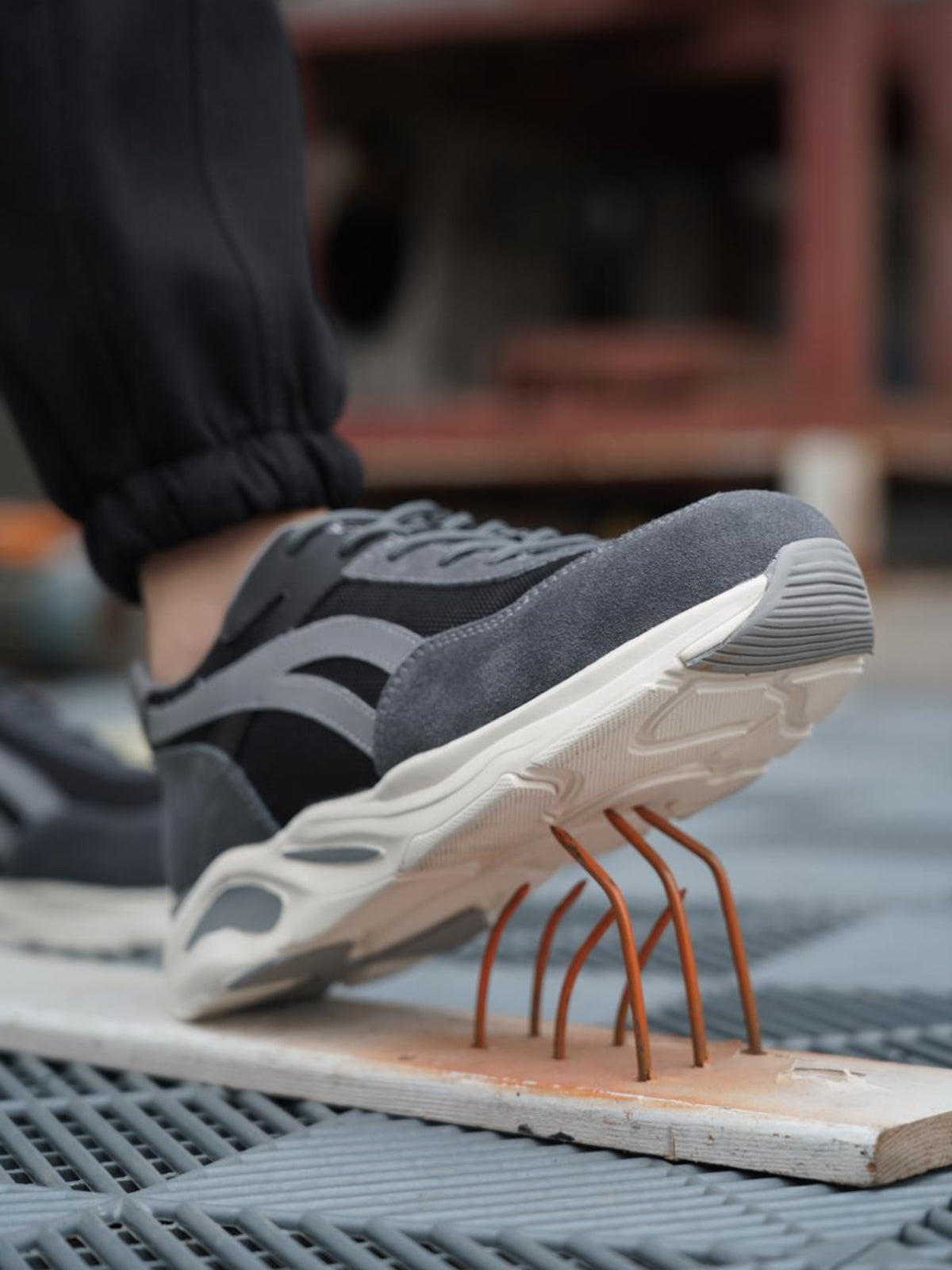
The toe cap protects against impact and compression. Steel distributes forces very reliably and is slim; composite is lighter and metal-free, which helps with metal detectors and cold insulation. Both meet required protection values; choose based on your application. Underfoot puncture resistance protects against nails and shards. Steel plates are classically robust; textile plates (aramid or similar fibers) are more flexible and lighter. Textile solutions often cover more of the outsole area and improve roll-through comfort.
The outsole determines grip and energy absorption. PU offers good cushioning at low weight; rubber resists heat and media better and provides excellent slip resistance. For long days, noticeable heel and forefoot cushioning helps reduce joint stress. Slight midfoot torsional stiffness stabilizes the step without blocking a natural gait. Practical features like quick-adjust closures, padded collars, and removable insoles boost comfort and help you use orthotics if the model’s certification allows it.
For uppers, breathable steel toe sneakers use abrasion-resistant textiles in ripstop or knit, often with reinforced toe and heel zones. Thermoplastic caps or protective films reduce wear on high-impact areas without overly blocking ventilation. The result is a mix of sporty style, protection, and climate you can feel daily.
Standards at a glance: S1, S1P, S2, S3 and ESD
S1 covers basic protection, including toe cap, closed heel, antistatic properties, and heel energy absorption. S1P adds puncture resistance—useful where nails or shards are a risk. S2 builds on S1 with increased water resistance of the upper, suitable for damp areas. S3 combines S2 with puncture resistance and a profiled outsole and is the robust choice for construction and outdoor use. ESD denotes controlled dissipation of electrostatic charges, important in electronics, logistics, or healthcare. In the updated EN ISO 20345, non-metal puncture inserts are often labeled PS or PL for more precise test methods. For guidance, see Safety classes S1P vs. S3 for steel-toe sneakers.
Use cases from construction to healthcare
In dry indoor areas like warehouses, workshops, assembly, or logistics, breathable S1 or S1P safety sneakers are ideal because they’re light and kind to foot climate. On construction sites, in landscaping, or frequent outdoor use, S3 shines with added water and puncture protection. In clinics, care, and labs, light, breathable, and ESD-capable models that are easy to clean and comfortable all day are in demand. In foodservice or food processing, slip resistance is key, combined with an appropriate standard and quick-drying uppers.
Buying guide: how to find your breathable steel toe sneakers
Start with your environment, then choose the right standard. Next decide on upper, outsole compound, and fit. That way climate, protection, and comfort match your workday.
Fit and sizing
The best breathability won’t help if the fit is wrong. Measure your feet in the afternoon when they’re slightly swollen. Stand on paper with both feet, mark heel and longest toe, measure in millimeters, and refer to the brand’s size chart. Leave about a thumb’s width of toe room so the cap doesn’t press during toe-off. Mind width: models with more forefoot volume avoid side pressure—especially for wider feet or in summer. A secure heel hold prevents slipping, reduces blisters, and improves stability. Removable insoles are useful if you use orthotics—check the model approval and available space under the toe cap. Find detailed tips in Sizing tips for steel-toe sneakers.
Season and climate
For warm, dry conditions, opt for uppers with large mesh zones. In changeable weather, benefit from tightly woven textiles with water-repellent treatment. In persistently wet environments, an S3 safety sneaker is sensible while breathable linings regulate the interior climate. Thin performance socks wick moisture better than thick cotton socks.
Care and durability
Remove dust and dirt after work so material pores stay open. Take out the insole regularly and let the shoe dry completely. Use care sprays that don’t seal off breathability. Replace worn insoles as needed and change socks during long shifts. This maintains both climate and cushioning and extends your sneakers’ lifespan.
Breathable steel toe sneakers from Shraks
At Shraks you’ll find a sporty Safety Sneakers collection combining breathability, protection, and style. Models like Shraks Stride, Moon, Moda, Venu and Nova use light, robust uppers, reliable toe caps, and grippy outsoles that deliver comfort all day. Depending on version, they meet EN ISO 20345 from SBP to S1P and come in sizes 35–47. That way, narrow and wider feet find a fresh-feel option. You also benefit from fast shipping, easy 60-day returns, and free delivery from €50.
FAQ about breathable safety sneakers
Which safety shoes are breathable
The most breathable are safety sneakers with textile or mesh uppers and moisture-wicking linings. In dry areas, S1 or S1P are ideal because they allow large ventilation areas. Look for perforated tongues, removable climate-regulating insoles, and not-too-thick padding. Avoid fully coated uppers in heat, as they slow evaporation. ESD-capable models are often breathable too, as their textile layers manage both moisture and static.
Which sneakers do orthopedists recommend
Orthopedists look for a stable heel counter, sufficient cushioning, good midfoot support, and a natural roll. For safety sneakers, that means a slip-resistant, well-cushioned sole, enough toe room despite the cap, and a fit that neither rubs nor pinches. Removable insoles help if you use orthotics. Choose the right width and try shoes on in the afternoon. For specific issues, consult your doctor.
What’s the difference between S1P and S1PS
Both denote S1-class safety shoes with puncture resistance. S1P is the established label, often with metal or textile inserts. S1PS comes from the updated EN ISO 20345 and describes a non-metal insert with a refined test method using a narrower nail. In short, S1PS provides a textile insert tested more realistically against sharp objects, while S1P denotes puncture resistance more generally.
Which is better, S2 or S3 in safety shoes
It depends on your job. S2 offers S1 basics plus higher resistance to water uptake in the upper—good for damp indoors. S3 adds puncture resistance and a lugged sole—useful on construction sites, outdoors, or where sharp debris may be underfoot. If you often work wet with underfoot hazards, S3 is the more robust choice.

Leave a comment
This site is protected by hCaptcha and the hCaptcha Privacy Policy and Terms of Service apply.