

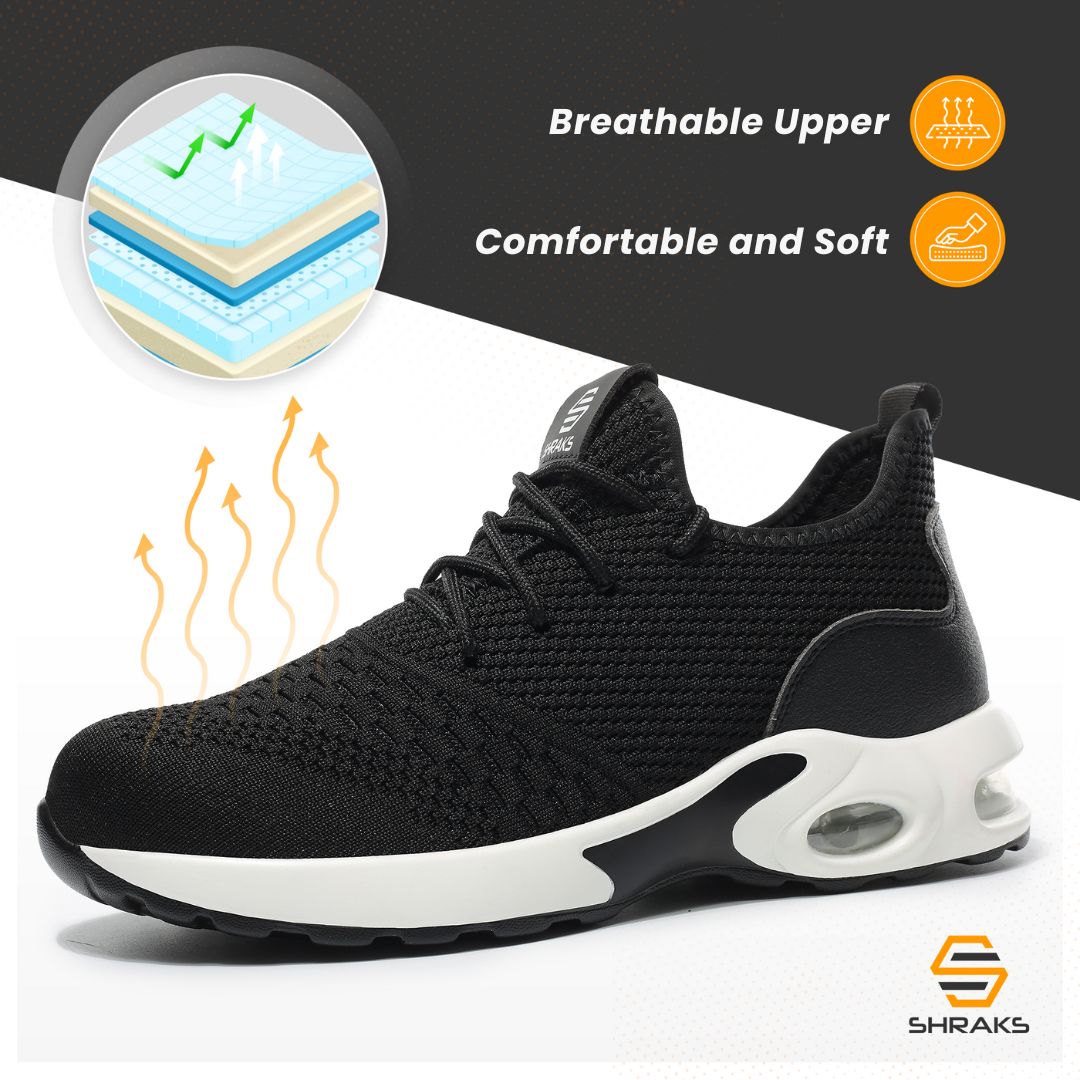
Long shifts, lots of movement and safety requirements make your feet sweat. That’s normal, but it becomes a problem when heat and moisture get trapped in your work sneakers. Then odor, blisters and reduced foothold can occur. The good news: with the right routines, socks and work sneakers, you can reliably control your foot climate. Here you’ll find focused tips against sweaty feet in work sneakers, including material guidance, quick fixes and care, so you stay dry, safe and focused all day. If you regularly wear classic safety shoes, find additional guidance here: Breathable safety shoes: tips against sweaty feet.
Causes: Why do feet sweat so much at work?
The soles of your feet have many sweat glands. Sweat itself is odorless, but bacteria break it down into short-chain fatty acids like butyric acid that smell unpleasant. At work, several factors combine: physical effort, warm environments, tight safety toecaps, moisture-trapping socks or too little drying time between uses. Stress and tight fits also increase pressure and friction, raising heat production.
The key is moisture management plus air exchange. Breathable uppers and moisture-wicking linings help, while absorbent, fast-drying socks move sweat away from the skin. If these building blocks are neglected, a warm, humid microclimate develops in the shoe where bacteria thrive. See which models breathe especially well in this article: Breathable safety sneakers compared.
Which socks help against sweaty feet?
Choose socks that rapidly absorb and release moisture. Natural fibers like merino wool or bamboo viscose offer high absorption and a pleasant feel. Technical blends with polyester or polyamide efficiently transport sweat away from the skin. Pure cotton may absorb, but it dries slowly and can sit damp on the skin.
- Material mix - Merino or bamboo content plus performance fibers for fast transport.
- Fit - Anatomical knit zones, firm midfoot band, flat toe seams to reduce friction.
- Antibacterial features - Silver yarns or finishes can inhibit odor formation.
- Change routine - Fresh, dry socks at least once daily; in heat, change again at midday.
Work sneakers: choosing breathability and construction
In work sneakers, construction determines foot climate. Air-permeable uppers (mesh, micro-velour) and moisture management in the lining reduce heat build-up. Removable insoles can be dried separately. Perforations or ventilation channels support airflow if your job allows. In wet environments, vapor-permeable membranes (e.g., high-performance climate membranes) protect without fully “sealing” your feet. Find suitable models in our category Breathable steel-toe sneakers for dry feet. For hot days, this guide also helps: Breathable steel-toe sneakers for summer.
Also consider protection class and fit. S1P models combine puncture resistance and slip resistance with a sporty build. Sufficient toe room, the right width and secure heel lock measurably improve climate because there’s less friction and pressure. Examples from the shraks range: Shraks Stride as a robust, breathable safety sneaker, Shraks Venu (S1P) for puncture-resistant protection with a sneaker look, and Shraks Moda (S1P) for lightweight wear focused on comfort. Most important is that the model suits your job and fits you well. How to find the right size & fit is explained here: Find the right size & fit: work sneakers.
Actionable tips to stop sweaty feet
If boots are mandatory in summer, follow extra ventilation and change tips.
- Wash feet daily - Lukewarm water and mild cleanser; clean thoroughly between toes.
- Dry thoroughly - Especially between toes to avoid moisture build-up and fungal risk.
- Use antiperspirant strategically - Apply at night to dry, intact skin; daily at first, then 2–3 times per week.
- Foot powder or spray - Absorbent powders and deodorizing sprays reduce moisture and odor day to day.
- Change socks - Fresh performance or merino socks daily; for heavy work, carry a spare and change at noon.
- Rotate shoes - Alternate at least two pairs so each pair can dry fully for 24 hours.
- Dry insoles - Remove after work. Cedar wood or activated-charcoal insoles bind moisture and odor.
- Support fast drying - Stuff with newspaper or use cedar shoe trees. Don’t place directly on radiators.
- Footbath reset - 10–15 minutes with sage or black tea infusion, then dry well.
- Barefoot breaks where safe - Briefly air out and let feet breathe without violating safety rules.
Shoe care and hygiene on the job
Clean shoes breathe better. Remove dust and dirt daily so pores and mesh don’t clog. Take out insoles to dry and disinfect the inside 1–2 times per week with a material-safe spray. Wash laces regularly; replace heavily used insoles as needed. Dry at room temperature and store in a ventilated space. This preserves breathability and reduces odor over time. A detailed guide is here: Clean and care for work sneakers properly.
FAQ: Sweaty feet in work shoes
What helps with sweaty feet in work shoes?
Combine moisture-wicking socks, breathable work sneakers and consistent hygiene. Wash and dry feet daily, use antiperspirant at night, rotate your shoes and dry insoles separately. Ensure a good fit to reduce friction and heat.
How do I stop work shoes from smelling?
First dry, then disinfect. Remove insoles, air out overnight, use shoe deodorant or odor neutralizers like activated charcoal or cedar shoe trees. As a home remedy, sprinkle some baking soda in and shake it out the next morning.
Why do my feet sweat so much at work?
Lots of movement, warm environments and tight safety toecaps increase sweat production. Moisture-holding socks or shoes that are too tight make it worse. Optimize materials and fit, rotate shoes and allow drying time. For extreme sweating, have hyperhidrosis ruled out medically.

Leave a comment
This site is protected by hCaptcha and the hCaptcha Privacy Policy and Terms of Service apply.