

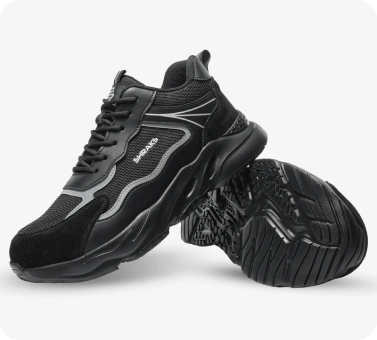
Light, safe and comfortable all day: lightweight safety shoes reduce fatigue, ease the strain on your joints and keep a sneaker-like look. This overview shows which materials and technologies save weight without compromising protection. Using the Shraks range with steel toe cap, Kevlar midsole and breathable uppers, you’ll understand what matters in daily work – whether in hospitality, warehousing or the trades. If you’re deciding what to buy, also read: What is a lightweight safety shoe? Materials & weight factors.
Materials and technologies for lightweight safety shoes
Toe protection
The toe-cap material drives weight. Steel toes are very robust, slim and cost-effective. Composite (plastic) toes are metal-free and usually lighter, but a bit bulkier. Aluminium sits in between. Many Shraks models use a compact steel toe certified to EN ISO 20345 for reliable protection with a sporty silhouette. Find a detailed comparison in Steel toe vs. composite toe: lightweight protection compared.
Puncture resistance
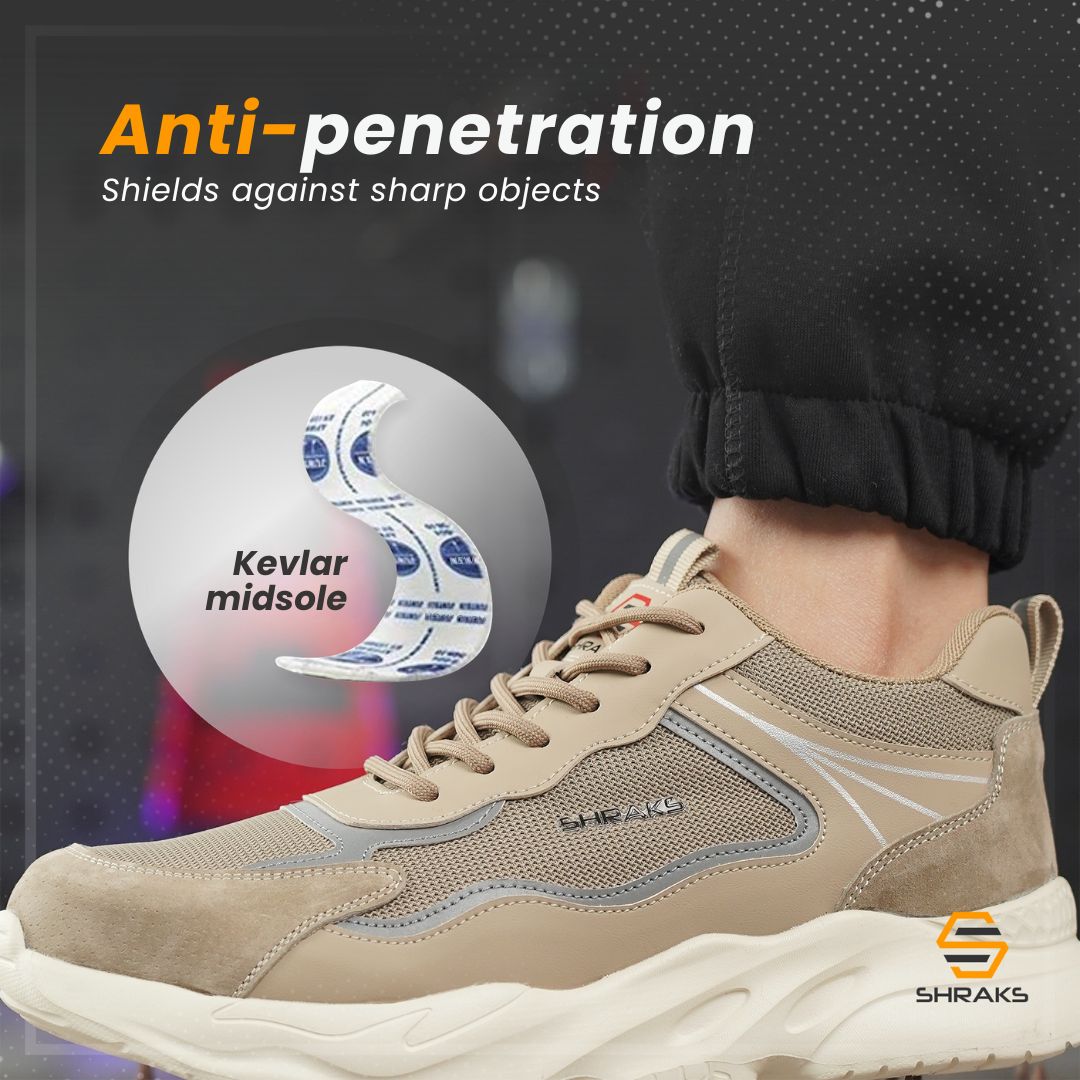
Steel plates are stable but heavy and stiff. Textile plates made of Kevlar or similar high-tech fibres noticeably cut weight, stay flexible and reliably protect against nails and shards. Shraks combines lightweight Kevlar midsoles with grippy outsoles – ideal if you stand, walk and kneel a lot.
Midsole and cushioning
Light midsoles made of ETPU, supercritical foam or PU–EVA blends deliver energy return and cushioning. This softens every step, reduces fatigue and promotes a dynamic roll-through. The benefit is most evident on hard floors and during long shifts. Learn more about innovative safety-sneaker technologies like ETPU, EVA and composites here.
Upper and outsole
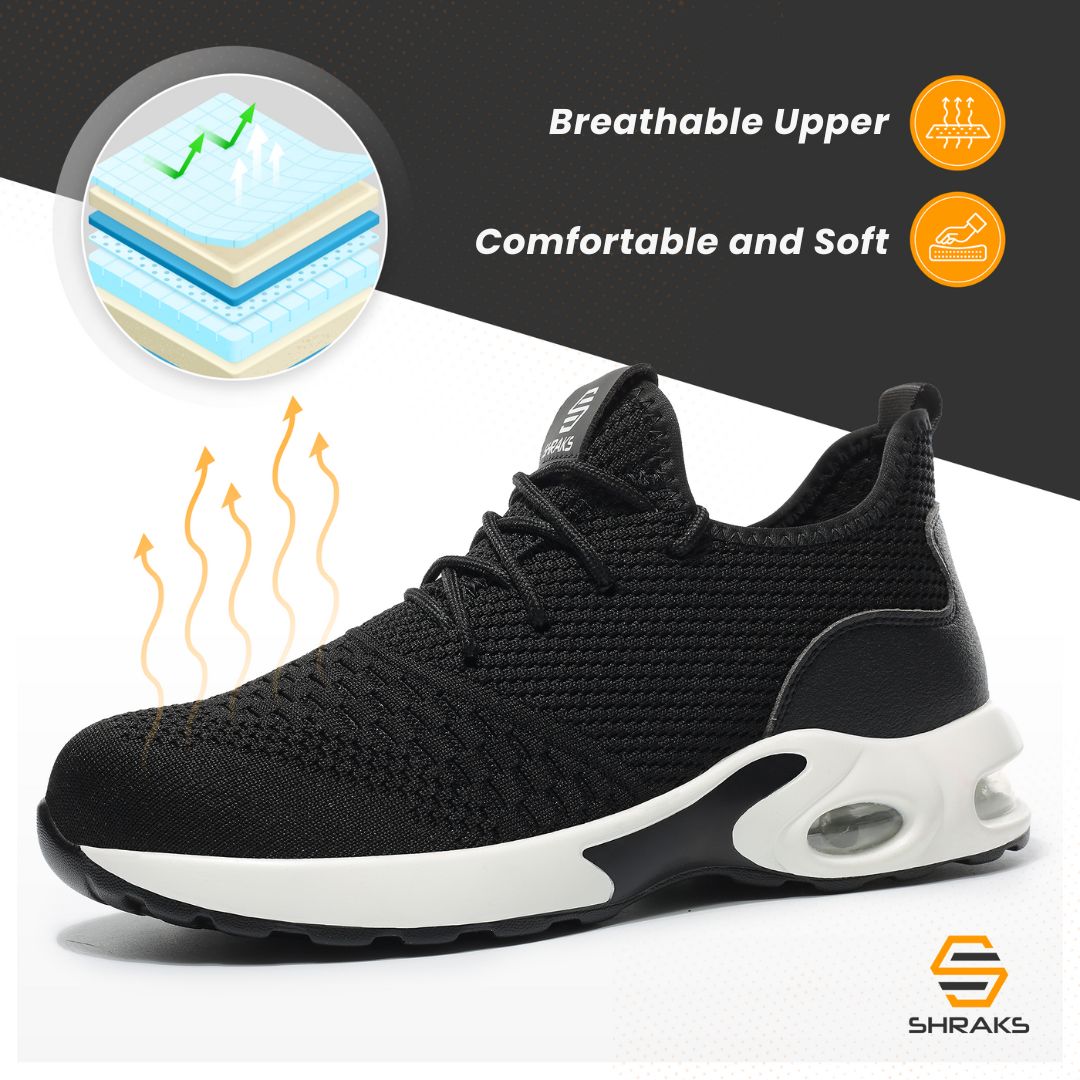
Breathable knit or mesh uppers and microfibre-reinforced zones keep the climate comfortable while saving grams. Slip-resistant rubber treads with SRC grip ensure traction on smooth, oily or greasy surfaces – a plus especially in hospitality. Practical tips on breathable materials: mesh, textiles & ventilation help you choose.
Standards, classes and use cases
Lightweight safety shoes must remain compliant: EN ISO 20345 defines toe protection, slip resistance and puncture resistance. Get a compact overview of protection classes and technical features via our Light S3 safety shoes: protection classes & technologies. Depending on the model, Shraks shoes are certified SB or S1P, such as Shraks Venu or Moda. For hospitality, we recommend S1P with SRC grip and breathable uppers for long, safe shifts.
Looking for lightweight, breathable models with a steel toe? Discover our Lightweight men’s safety shoes – current models.
FAQ
Which is better, steel toe or composite toe?
It depends on the job: composite is lighter and metal-free, steel is especially slim, robust and affordable. Both reliably meet EN ISO 20345.
Is composite lighter than steel?
Generally yes. Composite toes weigh significantly less than steel but often require a bit more volume in the toe area.
How much does a lightweight safety shoe weigh?
Depending on size and features, about 450 to 650 g per shoe. The toe cap, puncture protection and sole technology account for most of the weight.

Leave a comment
This site is protected by hCaptcha and the hCaptcha Privacy Policy and Terms of Service apply.