

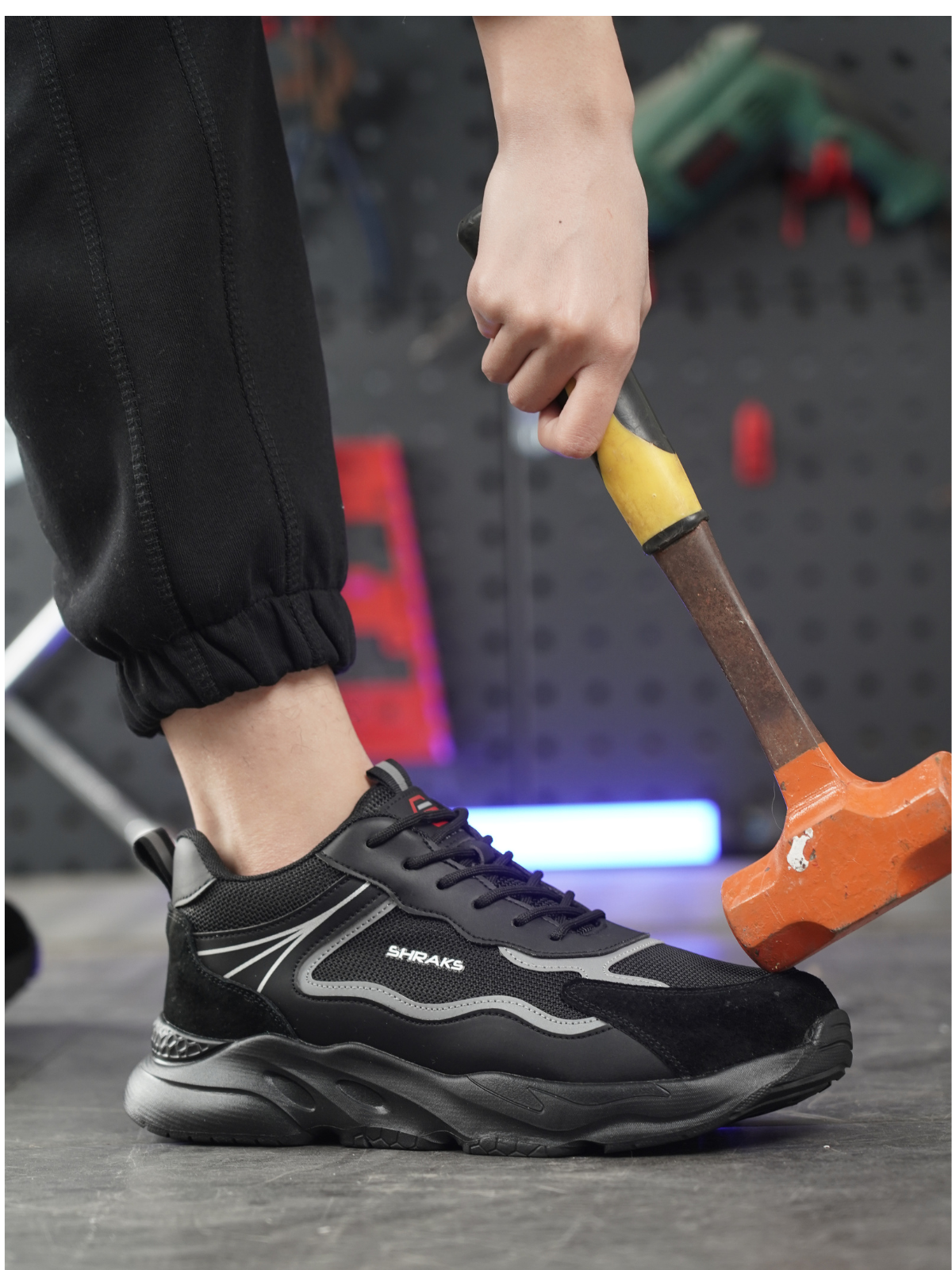
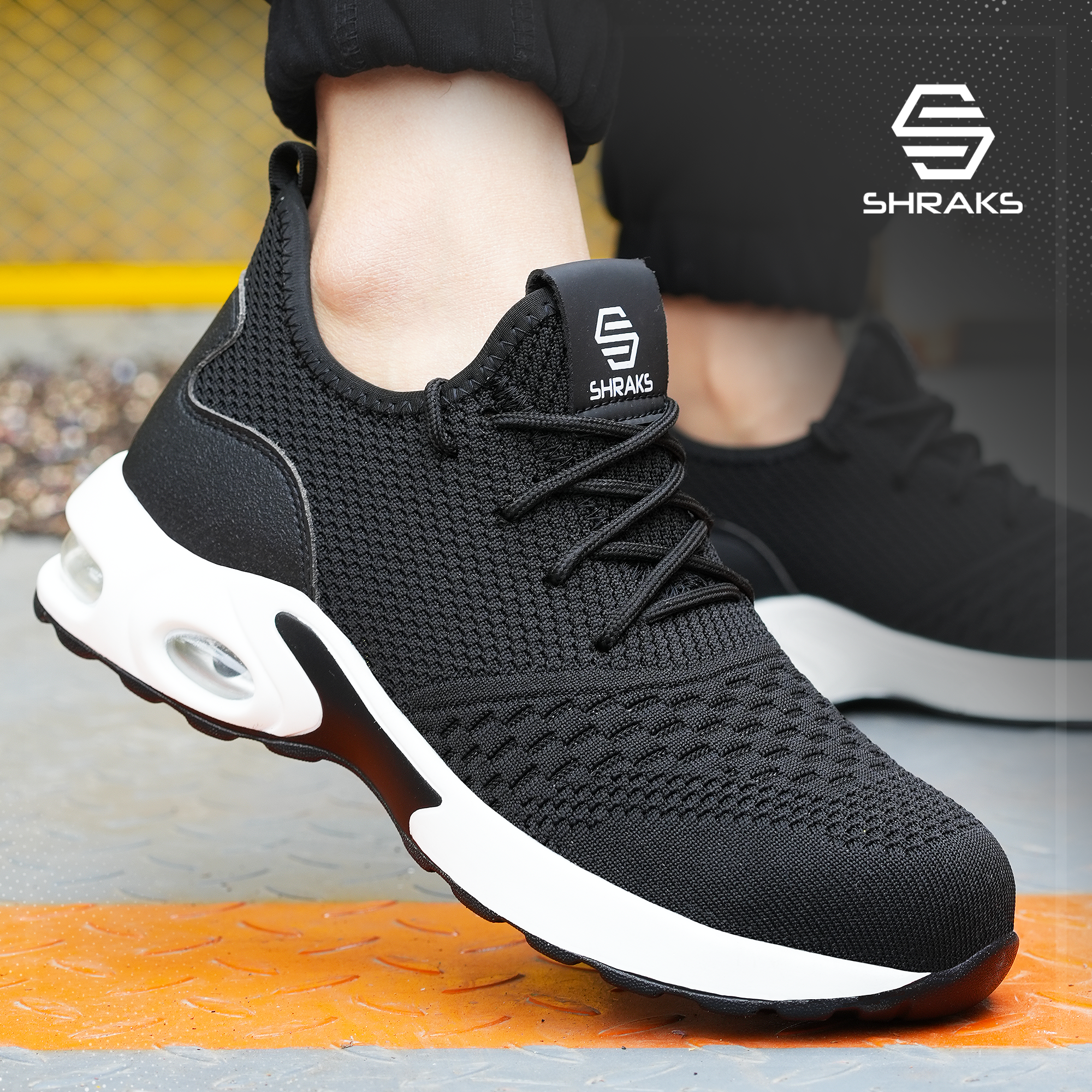
How long do your safety shoes really last? Lifespan depends on usage, environment, materials and care. With daily use, 6–12 months is typical, but under heavy stress it can be much shorter. In this guide you’ll get practical benchmarks, clear warning signs for replacement and care tips – see Care & cleaning: make steel‑toe sneakers last longer – to noticeably extend service life. Shraks models like Moon, Moda, Stride, Venu and Nova combine a steel toe, Kevlar midsole, breathable upper and elastic outsole to EN ISO 20345 – a robust foundation if you use and maintain them properly.
Benchmarks: How long do safety shoes last?
Expect 6–12 months for daily work in normal conditions. In high‑stress jobs – construction, metalwork, frequent kneeling, chemical exposure – 3–6 months is realistic. With lighter use or occasional wear, 12–24 months is possible. Looks aren’t reliable: internal cushioning, bonding or the toe cap may already be weakened while the shoe still looks fine. Rotating two identical pairs often extends life, as materials and cushioning can recover between shifts. More background: How long do work shoes last on the job?
Real‑world factors
Surface, dirt and chemicals are decisive. Rough, sharp floors wear tread faster; moisture and oil attack materials; big temperature swings stress bonds. Examples: on site, flex zones and toe areas wear faster from squatting and edge contact; in workshops, oil and metal shavings reduce traction; in warehouses, long walking distances strain cushioning and heel. Gait, body weight and off‑duty wear matter too. Short, regular checks help catch issues early before safety and comfort suffer. In demanding environments, choose more robust models – guided by the safety classes for steel‑toe sneakers: S1P vs. S3.
Materials and construction: what drives lifespan
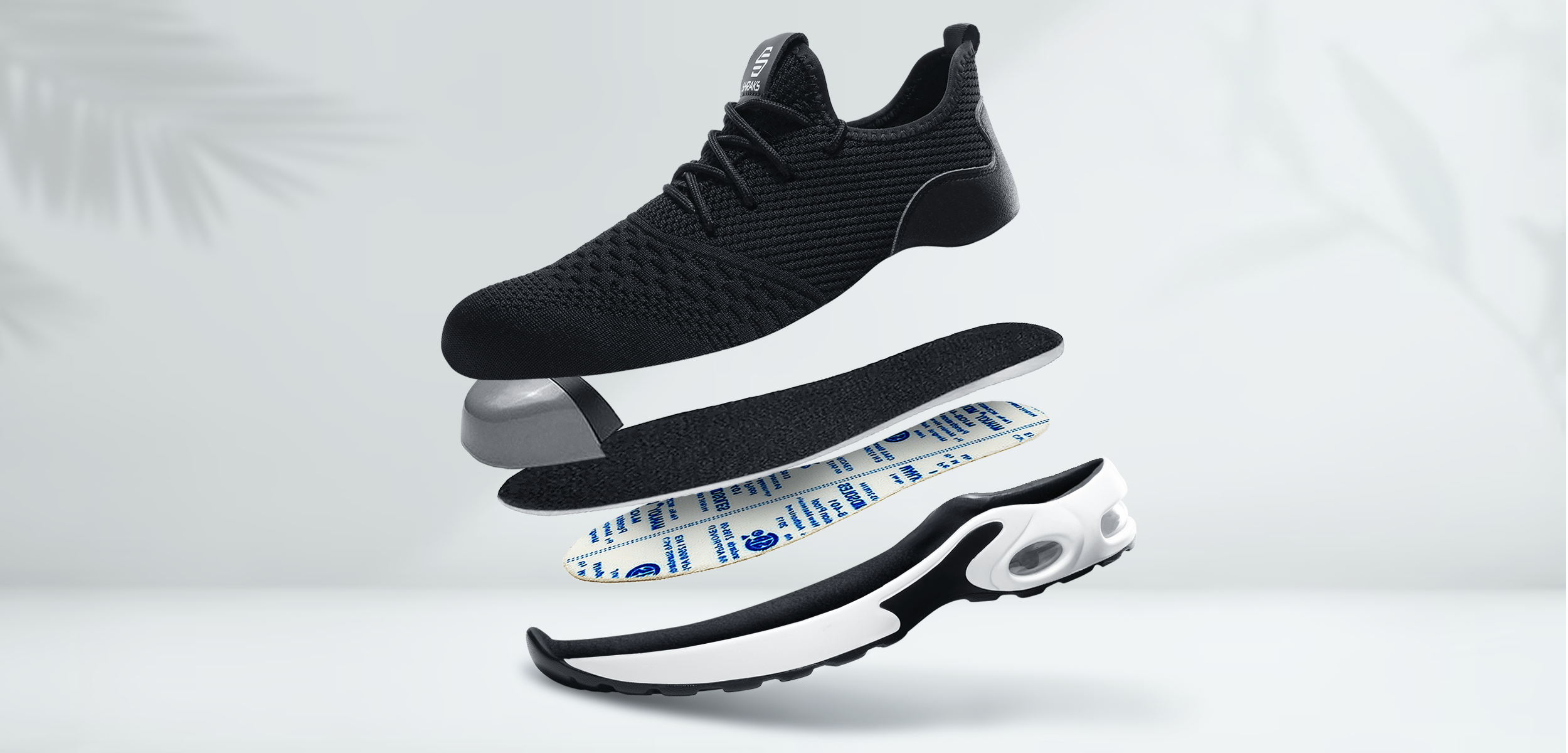
Outsoles make the difference. PU is light and cushioned but ages with prolonged oil exposure and hydrolysis. TPU offers better abrasion resistance and cold grip, while rubber is often most resilient to heat, cold and chemicals – usually a bit heavier. Textile puncture protection (Kevlar) is flexible and light; steel plates are very crush‑resistant but stiffer. Steel toe caps resist cuts and point impacts well but may deform invisibly after a hard hit. Uppers: leather is tough and needs more care; modern textiles are light and breathable but need consistent cleaning to avoid early fiber fuzzing. Clean, solid stitching and strong bonding noticeably extend service life. Shraks uses steel toes, Kevlar midsoles, breathable collars and elastic outsoles to EN ISO 20345 – a solid base for long use if you mind care and conditions. If low weight with high daily usability matters, read: Light steel‑toe sneakers: what to look for.
Care, use and storage
Alternate between two pairs so cushioning and lining can dry. Ensure proper fit to reduce friction and early wear. Dry wet shoes at room temperature – no heaters or direct sun. Remove dirt and especially oil and chemicals promptly so outsole and upper don’t age prematurely. Air insoles separately, replace when needed, and lace firmly so heel and seams don’t work unnecessarily. Store dry, cool and dark. After contact with aggressive media or an impact, inspect outsole edges, seams and the toe cap thoroughly. Step‑by‑step guide: Clean and care for work sneakers properly.
Warning signs for replacement
Worn tread with noticeably less grip on smooth floors. Cracks, chunks or delamination on the outsole, especially at flex zones and edges. Visible toe cap, exposed puncture layer or soft spots under the forefoot. Burst or heavily abraded uppers, open seams. Deformed heel counter with heel slip, fading cushioning with tired or aching feet by day’s end. Persistent moisture, mold or strong odor after soaking. After accidents or hard impacts always replace – internal damage is often not visible from the outside.
Do safety shoes have an expiry date?
There’s no fixed expiry date. EN ISO 20345 defines performance, not service life. Materials age – PU can hydrolyze and crumble over years, especially with warm, humid storage. Many companies do 3‑monthly checks and plan replacement every 6–12 months depending on use. Manufacturer warranty ≠ lifespan. Check the manufacturing date on the label and store unused shoes cool and dry to slow aging. Details on optimal replacement intervals: When should safety shoes be replaced?
FAQ
How long do steel‑toe shoes last?
With daily use in normal conditions usually 6–12 months. Under heavy stress – lots of kneeling, rough floors, oil, chemicals – more like 3–6 months. With occasional wear, 12–24 months is possible, provided proper care and storage.
Do safety shoes have an expiry date?
No fixed date. Materials like PU do age, especially with heat and humidity. Regular visual and functional checks are essential. Many employers use preventive 6–12 month intervals depending on workload.
When must safety shoes be replaced?
If grip drops noticeably, the sole cracks or separates, uppers or seams open, the toe cap is visible or took an impact, moisture lingers, or cushioning clearly fades. After accidents always replace, even if the outside looks fine.

Leave a comment
This site is protected by hCaptcha and the hCaptcha Privacy Policy and Terms of Service apply.