

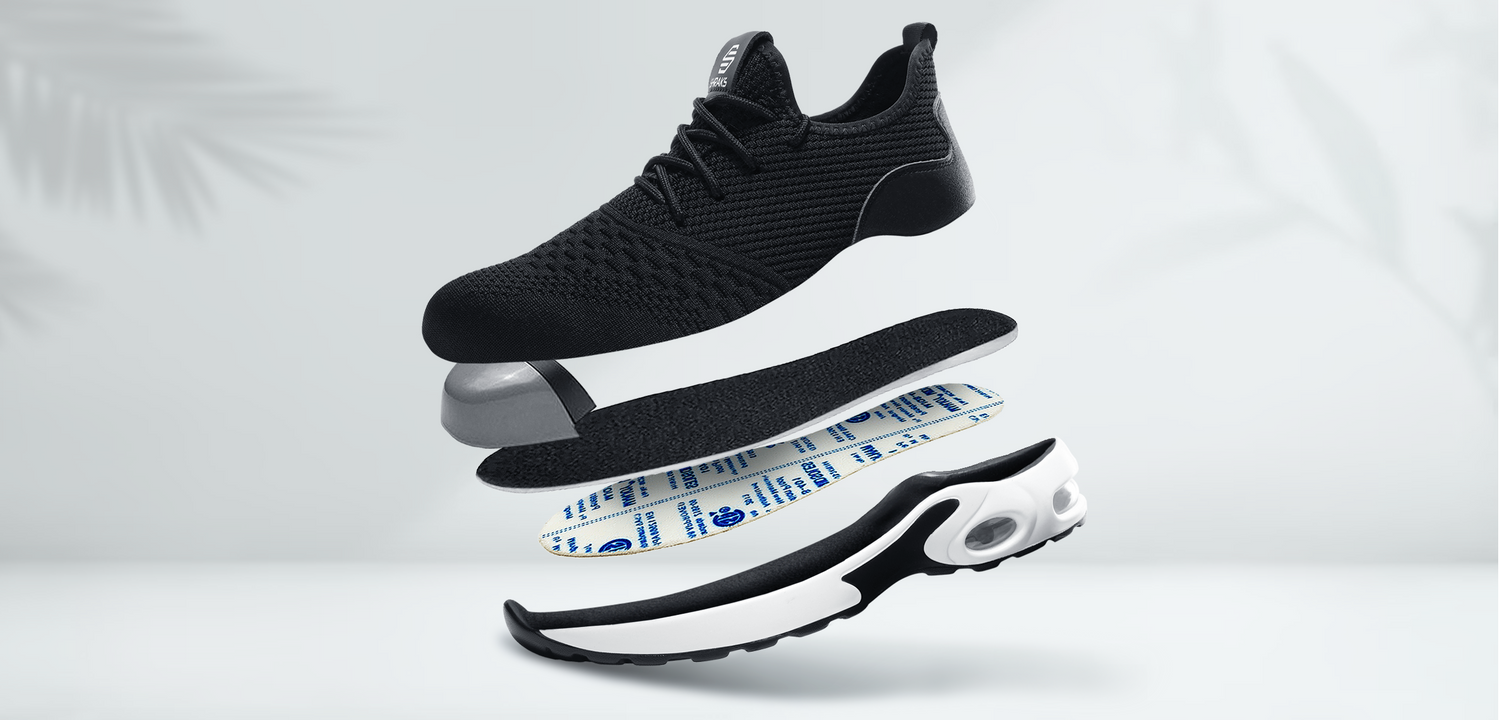
You’re looking for safety shoes that won’t make you sweat yet still meet all standards. In this comparison, you’ll learn what really matters in breathable safety sneakers, which safety classes suit which tasks, and how to find the right balance of protection, ventilation, and comfort. With concrete Shraks models and a clear buying guide, you’ll get quick, well-founded decision support. Deeper background on climate in warm work environments is here: Breathable safety shoes: comfort in warm work environments.
How to properly compare breathable safety sneakers
A fair comparison always evaluates use case and environment: How hot is it, how humid, how significant are impact and penetration risks, how many hours per day do you wear the shoes. Set objective criteria and weight them by your job profile:
- Breathability and moisture management
- Safety class per EN ISO 20345 (toe cap, penetration resistance, water)
- Slip resistance on your typical floors
- Fit, cushioning, insole and weight
- Upper materials (mesh, microfiber, leather) and lining
- ESD requirements, metal-free vs. steel toe, care effort
Assess what you need per criterion, not what sounds “maximum.” Example: In a dry, hot warehouse, S3 with a waterproof membrane brings less than S1P with lots of mesh and top-tier penetration resistance. The trade-offs between classes are explained in S1P vs. S3: which class breathes better?.
Models compared: breathable safety sneakers from Shraks
Shraks combines sneaker style with EN ISO 20345 protection. The following models cover common needs—from lightweight, extra-airy S1P to robust sneakers with toe protection. If you want to filter models directly, visit the category Discover breathable safety sneakers now.
Shraks Stride
If you want a modern sneaker look with classic toe protection, Stride is the versatile choice for dry work environments. The breathable upper supports a pleasant foot climate even on long shifts.
- EN ISO 20345 compliant with toe cap
- Breathable upper for a better climate
- Slip-resistant outsole for secure footing
- Use: warehousing, assembly, light production, service
Shraks Moda
Moda blends safety with lifestyle colors. You get breathable comfort and a sneaker that looks good after hours too. Ideal if you value style without sacrificing safety.
- EN ISO 20345 compliant with toe cap
- Lightweight, airy feel
- Available in multiple colorways
- Use: logistics, retail, service, light workshop
Shraks Venu (S1P)
The breathable lightweight for warm, dry conditions. Venu focuses on S1P protection for dry zones and excels with high airflow—optimal if sweating is your biggest issue.
- Safety class S1P per EN ISO 20345
- Highly breathable upper for summer and indoor areas
- Slip-resistant outsole, comfortable cushioning
- Use: dry production, warehousing, assembly, electro-ESD settings depending on variant
Shraks Nova
Nova is for those who want robust toe caps in a sneaker design. The breathable material supports a good climate when the workday runs long.
- EN ISO 20345 compliant with toe cap
- Breathable zones for better ventilation
- Slip-resistant sole, comfort-focused build
- Use: trades, workshop, logistics with varied tasks
Choosing safety classes—what it means for breathability
EN ISO 20345 defines requirements for toe protection, penetration resistance, water resistance, and more. For in-shoe climate, the rule of thumb is: the more water barriers, the lower the air permeability. Focus on the balance between required protection and ventilation.
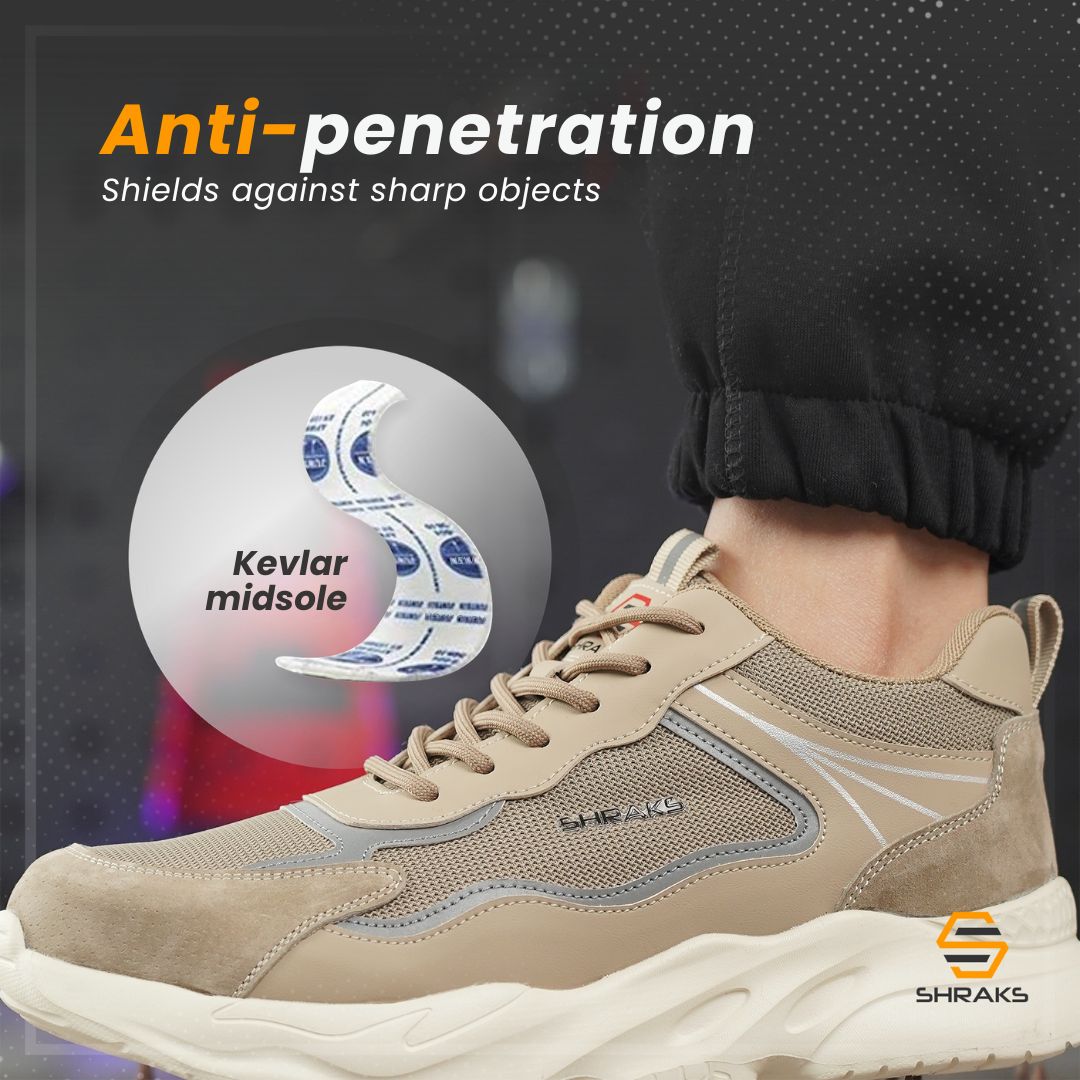
| Class | Climate/Breathability | Wet conditions | Penetration resistance | Typical uses |
|---|---|---|---|---|
| S1 | Very airy possible | No wet protection | No | Dry warehouses, storage, service |
| S1P | Airy with protection | No wet protection | Yes | Dry production, assembly, light workshop |
| S2 | Medium, material dependent | Water-repellent | No | Food industry, cleaning, damp zones without penetration risks |
| S3 | Rather low, build dependent | Water-repellent | Yes | Construction, outdoors, wet environments |
Tip: If you need S3, look for breathable linings and uppers with air channels. In dry settings, S1P often delivers the best ratio of ventilation to safety.
Understanding breathability: materials and construction
Breathable safety sneakers combine air-permeable uppers with moisture-wicking linings. Textile or mesh uppers increase air circulation, reduce sweat, and help prevent odors. Microfiber and advanced knit structures pair low weight with abrasion resistance. Concrete summer examples and benefits are shown in Breathable steel-toe sneakers for summer.
Inside, perforated insoles and moisture-managing linings absorb sweat and move it away quickly. A well-ventilated tongue and side mesh zones increase airflow. Also check sole construction: flex grooves improve the roll, while energy-return midsoles reduce fatigue without hindering airflow.
Important: Multi-layer waterproof membranes reduce air permeability. If you don’t need wet protection, prioritize more open textiles and breathable linings. In warm environments, thinner yet robust textiles are usually more comfortable than thick leather builds.
Buying guide: the criteria that truly matter
Use these criteria to quickly find the right breathable safety sneaker for your job.
- Use and environment: heat, dryness, wet, exposure to oils or chemicals. The drier and warmer, the more S1 or S1P with lots of mesh makes sense.
- Safety class: choose S1P for dry areas with penetration risks, S3 for wet outdoors and construction. In strictly dry zones, S1 often suffices.
- Breathability: look for large mesh panels, airy tongue design, moisture-wicking linings, and perforated insoles.
- Fit: toe room and secure heel hold are mandatory. Try both feet in the afternoon, wear your work socks, and walk for several minutes.
- Cushioning and stability: a balanced midsole reduces fatigue. Too soft is unstable; too firm stresses joints. Aim for a smooth roll.
- Slip resistance: choose tread suited to your typical floors. SRC outsoles are tested on ceramic and steel.
- Toe cap: steel is robust and thin; composite is often lighter and better insulated from cold. Decide based on weight and climate needs.
- ESD and electrics: in sensitive settings, choose ESD-rated versions. Check the dissipation spec.
- Metal-free vs. metal: metal-free versions are often lighter and less cold-conductive but may be bulkier. Test the fit.
- Care and hygiene: removable insoles, quick-drying materials, and easy-clean uppers keep things fresh daily.
If weight is your top priority, see the overview Lightweight safety sneakers: comparison.
Sizes, fit, and break-in tips
Measure your foot in the afternoon wearing work socks. Go by internal length in centimeters and pick enough toe clearance. Mind width: a breathable sneaker won’t help if pressure points undermine ventilation, causing shorter steps and more sweating.
For break-in, use shorter intervals in the first days. Use moisture-managing insoles and change socks on long shifts. If you wear orthotics, check compatibility with the safety standard—many models are prepared for this.
Care and hygiene: keeping breathable sneakers fresh
Air shoes after each shift, remove insoles, and dry at room temperature. Brush off dust and dirt dry, clean textile zones gently with mild detergent and a damp cloth. Use functional socks, change daily, and rotate between two pairs if you sweat heavily. This preserves breathability and comfort long-term. More hands-on tips here: Tips against sweaty feet in safety shoes.
FAQ about breathable safety sneakers
Which safety shoes are breathable?
The most breathable models use plenty of mesh or textile uppers, an airy tongue, and moisture-wicking linings. In dry environments, S1 and S1P typically offer the best climate. At Shraks, sneakers like Venu, Stride, Moda, and Nova prioritize ventilation and comfort without compromising EN ISO 20345 safety.
In which shoes do you sweat the least?
In lightweight S1P or S1 sneakers with large mesh panels, perforated insoles, and quick-drying linings you’ll sweat the least. Avoid unnecessary wet protection if you mainly work in dry halls. Functional mixed-fiber socks further support moisture transfer.
What are the best safety shoes?
The best safety shoes are those that match your use case precisely. For warm, dry areas, breathable S1P sneakers are often ideal. For wet outdoors or construction, you need S3. Always consider fit, slip resistance, and linings that draw moisture away from the foot.
Which is better, S1P or S3?
Neither is inherently better. S1P is first choice for dry conditions with penetration risks and is usually much airier. S3 adds water repellency and suits wet, variable environments but can be less breathable. Decide based on environment, not the label.
If you’re seeking breathable safety sneakers that blend style, comfort, and standards compliance, Shraks offers models for dry indoor work, mixed tasks, and light outdoor jobs. Choose the safety class for your setting and prioritize mesh and moisture-regulating linings when climate is your top criterion.


Leave a comment
This site is protected by hCaptcha and the hCaptcha Privacy Policy and Terms of Service apply.